

OpenAI’s ad platform now covers travel campaigns in more than 40 markets. The category is open. The evidence on what it does to hotel bookings is not.
ChatGPT ads have moved, in seven months, from a single-market experiment to a live advertising marketplace running in more than 40 countries, and travel is one of the four consumer categories OpenAI opened to advertisers from day one. Most of what hotel executives have read this year about ChatGPT and their business has concerned being named — or not — inside an AI-generated answer. This is a different mechanism: a paid placement that a competitor, an OTA, or a rival property can now buy to sit next to that same answer, inside a product that scaled from zero to a billion dollars in annualized ad revenue faster than almost any digital ad format before it. Whether that inventory is already relevant to a hotel’s own marketing budget, or still too early to call, is worth working through against the facts as they stand now — not the ones that applied in February.
Table of Contents
1. Seven Months, Nine Markets to Forty
OpenAI began testing ads inside ChatGPT in the United States in February 2026, limited to logged-in adult users on the free tier and the low-cost Go plan; people on Plus, Pro, Business, Enterprise and Education subscriptions do not see ads. Within weeks the pilot extended to Canada, Australia and New Zealand, and by mid-year to the UK, Mexico, Brazil, Japan and South Korea — nine markets beyond the US. On 24 August 2026, OpenAI added 31 European countries in a single expansion, its largest to date, and a week later opened self-serve access through its Ads Manager tool across India, Europe, the Middle East and North Africa. By the end of August, the company said the product was available in more than 40 countries.
| Date (2026) | Milestone | Cumulative markets |
| Feb 9 | US pilot begins — Free and Go tiers, logged-in adults only | 1 |
| Weeks later | Pilot extends to Canada, Australia, New Zealand | 4 |
| By mid-year | UK, Mexico, Brazil, Japan, South Korea added | 9 |
| Aug 24 | 31 European countries added — largest single expansion to date | 40 |
| Aug 31 | Self-serve Ads Manager opens in India, Europe, Middle East, North Africa | 40+ |
Table 1: ChatGPT Ads — global rollout timeline, February–August 2026. Source: OpenAI product announcements.
For a hotel group operating across regions, this closes the gap between an American product still finding its footing and an advertising channel with a geographic reach now comparable to established paid-search and metasearch inventory. A property no longer needs to wait for a market-specific rollout to assess whether its guests are inside the addressable audience. The relevant P&L line is acquisition cost: this is now, in principle, a line item a revenue manager in Milan or Tokyo can request a quote for, not a US-only curiosity to track from a distance. What is still uneven, market by market, is the difference between an ad test being technically live and self-serve access with usable reporting actually being available — a distinction that has trailed the underlying rollout by weeks in every region so far.
2. An Answer and an Ad, Side by Side
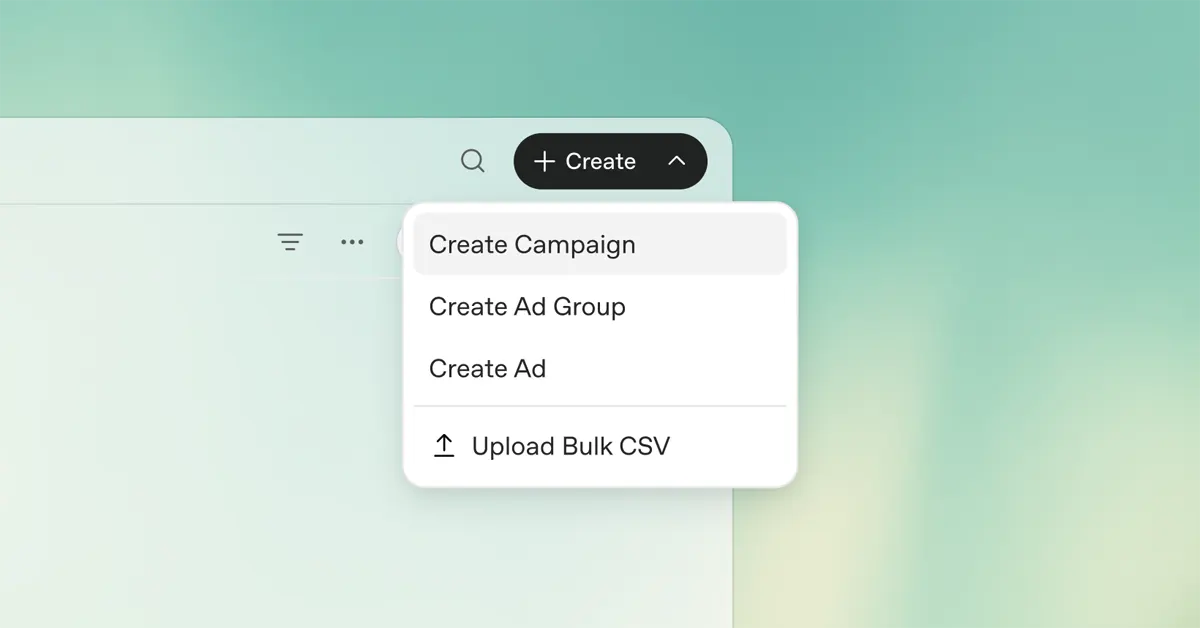
A ChatGPT ad appears as a small, labeled unit, kept visually separate from ChatGPT’s own answer and typically placed underneath it. OpenAI has said the system selects which ad to show using the context of the live conversation and, in some markets and depending on a user’s settings, broader context from that person’s use of ChatGPT. The company states, and has repeated in each expansion announcement, that advertising does not influence the answer ChatGPT gives and that advertisers are not given access to a user’s conversations.
The practical effect for a hotel is that the brand ChatGPT names organically in a response and the brand shown in the paid unit beneath it are two separate contests, decided by two separate mechanisms. A property could be the one ChatGPT recommends unprompted, while a competing hotel, or the OTA that lists that same property’s rooms, pays to appear as the clickable link directly underneath. Travel and experiences was one of the categories OpenAI opened to advertisers from the start of the test, and Expedia was confirmed by an OpenAI spokesperson as among the earliest brands running ads in the original February pilot — evidence that at least one large intermediary treated the inventory as worth buying from week one, not after evidence accumulated.
What deserves attention going forward is the direction of the format rather than its current shape. OpenAI has said it expects to add ad formats, bidding options and targeting tools over time, and has already introduced conversion-based bidding and geo-targeting since February. A hotel evaluating this channel today is evaluating an early version of it. How paid and organic placements interact — and whether that relationship stays fixed — is one of the more consequential unknowns for any brand weighing whether the paid unit is worth contesting.
3. Travel Was Never on the Restricted List
OpenAI’s own ad policy sorts categories into those allowed at launch and those gated behind manual, case-by-case approval. Travel and experiences sits in the first group from the start of the test, alongside household goods, local services, and digital products or education. Financial services, healthcare and legal services, by contrast, require individual advertiser approval; alcohol, gambling and political advertising are excluded outright, with a narrow exception that lets a casino resort advertise the lodging or entertainment side of its offer without promoting the gambling itself.
For hotels, that removes a friction point other categories are still negotiating. A hotel or hotel group does not need to clear the review a bank or a clinic does before testing the format — the operational barrier to entry is comparatively low. That lowers the cost of finding out, for a specific property or brand, whether the channel performs, rather than it being a hypothetical available “eventually.”
The category list, and the rules around it, are not fixed. OpenAI’s own policy changelog shows five revisions between March and August 2026 alone, the most recent narrowing what counts as a sensitive advice context. The definition of “travel and experiences,” and how granular the associated targeting becomes — by destination, travel dates, or property type — is worth checking directly against OpenAI’s published policy rather than assumed to hold through the next budget cycle.
4. Who Is Actually Buying the Inventory
Access to ChatGPT ads did not open evenly. Through most of the pilot, advertisers could only buy through OpenAI’s own sales team, agency partners, or technology partners; self-serve access through Ads Manager followed later, market by market, and OpenAI has said its introduction broadened participation among small and medium-sized businesses rather than starting there. Expedia’s confirmed early presence, alongside enterprise advertisers such as Best Buy and Qualcomm, reflects that structure: the earliest buyers were large advertisers already equipped to move quickly through a managed-sales relationship.
The commercial consequence for an individual hotel or a regional group is about relative footing, not eligibility. An OTA with an existing agency relationship, established creative production, and a budget sized for continuous testing is positioned to act on new inventory faster than a single property evaluating the format for the first time, even where both are, on paper, permitted to advertise. That gap shows up in acquisition cost before it shows up in policy: whoever tests and iterates fastest sets the going rate everyone else then competes against.
OpenAI has said self-serve access is what changed that dynamic. Whether it has, in practice, narrowed the gap between an OTA’s testing budget and a single hotel’s — or whether minimum spend and campaign-management overhead still favor the larger buyer — is not something OpenAI or an independent research body has published data on. It is a fair question to raise directly with a sales or agency contact before committing budget, rather than one the current public record answers.
5. The Booking Number That Hasn’t Moved
Set against the speed of the rollout is a slower-moving figure from the demand side. Phocuswright’s research on US traveler behavior found that general search engines’ share as the most-used trip-research tool fell from 51% in late 2024 to 36% in the second half of 2025, while generative AI platforms rose to 33% usage for trip research over the same period. Separately, Booking Holdings’ chief financial officer told analysts on the company’s second-quarter 2026 earnings call that traffic referred from large language models — combining paid and unpaid sources — remains below 1% of the company’s total room nights, and that the figure has not moved meaningfully in recent quarters even as the company’s brands appear frequently inside AI-generated answers.
Those two figures describe different stages of the same funnel, and the gap between them is the commercial issue. Research behavior is shifting toward AI platforms quickly. Measurable, attributable bookings from that behavior — at least by the one large intermediary that has disclosed a number — are not moving at anything like the same pace. For a hotel weighing a ChatGPT ads test now, that gap means any return is more likely to show up, if at all, as visibility or awareness at this stage than as a directly attributable booking or RevPAR gain a finance team can weigh against the cost of the test.
OpenAI has continued building measurement tools — a tracking pixel, a conversions API, and integrations with third-party measurement partners — aimed at closing that attribution gap, and has pointed to early advertiser results as evidence the tools are starting to work. Whether hotel-specific attribution reaches a comparable standard, and whether Booking Holdings’ sub-1% figure moves in the quarters ahead, are two data points worth checking again before the next budget cycle rather than assumptions to carry into it.
None of this settles whether a given hotel should be running ChatGPT ads before the end of 2026. The category is open, the geographic reach is now global, and at least one large OTA moved early. The booking evidence, where it has been disclosed at all, does not yet support a case for material spend based on demonstrated return. Both things are true in the same channel, seven months in.
Data Source
- OpenAI, “Testing ads in ChatGPT,” January 16, 2026, updated March 26, 2026. Announces the initial US ad pilot on Free and Go tiers and the subsequent pilot expansion to Canada, Australia and New Zealand.
- OpenAI, “ChatGPT Ads expands across Europe,” August 18, 2026, updated August 31, 2026. Announces the 31-country European expansion and the opening of self-serve Ads Manager access in those markets.
- OpenAI, “A milestone in expanding access to AI,” August 31, 2026. Reports a $1 billion annualized ad revenue run rate within 200 days of launch and self-serve expansion to India, Europe, the Middle East and North Africa.
- OpenAI, “Ad policies,” updated August 31, 2026. Defines allowed and disallowed advertising categories, confirming travel and experiences as an initial allowed category and detailing the gambling, political and health-advertising exclusions.
- Adweek, “Best Buy, Expedia, Enterprise Mobility Are Among the First Brands Spotted Running Ads on ChatGPT,” February 19, 2026. Reports OpenAI’s confirmation that Expedia was among the earliest brands running ads during the February 2026 pilot.
- Phocuswright, “The AI Surge: Travel’s Fastest Behavioral Shift in a Decade,” 2026. Survey-based research tracking US travelers’ shift in trip-research channel usage, including the decline in general search engine use and the rise of generative AI platforms.
- Phocuswright, “U.S. Online Travel Agency Market Essentials 2026,” 2026. Market-sizing report on US OTA gross bookings and the hotel segment’s share of total OTA business.
- PhocusWire, “Booking Holdings: AI visibility is up, but referrals stay under 1% of room nights,” August 2026. Reports statements made by Booking Holdings CFO Ewout Steenbergen on the company’s Q2 2026 earnings call regarding the share of room nights referred by large language models.
- Euronews, “ChatGPT to start showing ads across Europe next week,” August 21, 2026. Independent reporting confirming the timeline and scope of the European ad rollout.