

A smaller, shorter Hyatt Place asks developers to trade rooms for savings, in a market where converting an existing hotel is often easier.
Hyatt wants more owners to build, and it has concluded that the building is the problem.
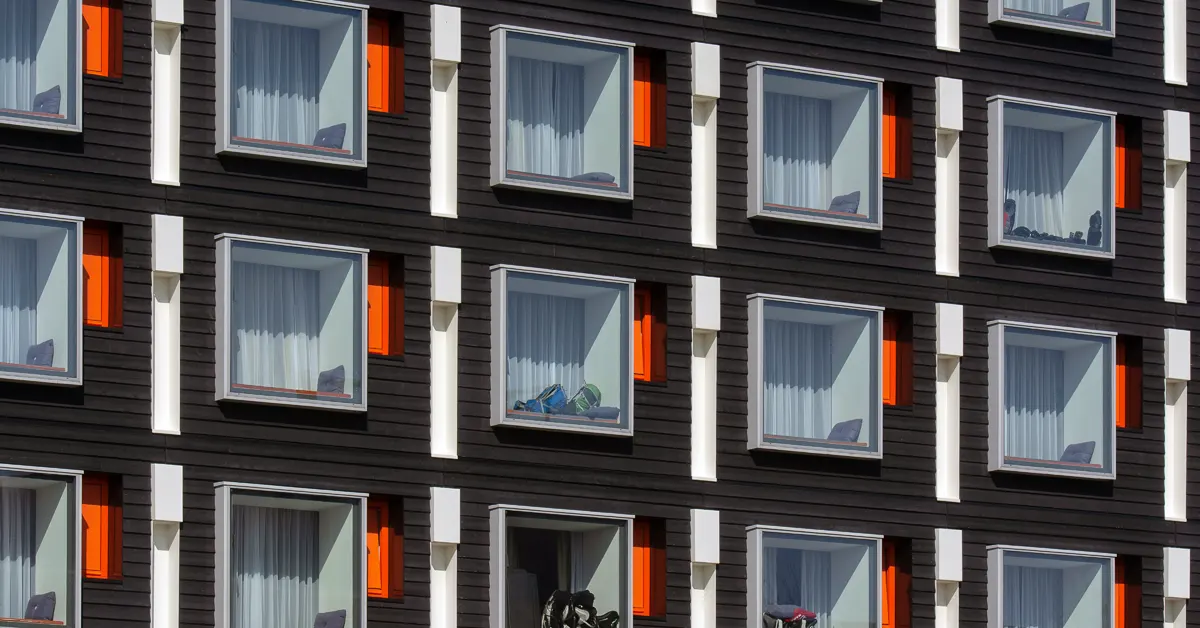
On October 5 the company unveiled a fourth-generation Hyatt Place. The design replaces a six-story steel-and-concrete structure with a four-story wood one, cuts the room count from 140 to 127 and shrinks the building area by nearly 20%. Together, Hyatt expects the changes to reduce building costs by about 25%.
The saving is larger than what rivals have claimed for recent prototypes, and the design sells owners fewer rooms. That makes it a test of how far brands can cut costs before the savings come out of revenue.
Table of Contents
1. An owner’s market, for now
The backdrop is hard on developers. At the Lodging Conference in Phoenix last week, one panelist said US hotel net operating margins are down 20% since 2019. CoStar puts new supply growth at 0.4% for 2026. HVS says supply grew 0.7% in 2025, against a pre-2020 average of 1.4%.
Hyatt has its own reasons to want projects started. It says it averages four hotels per market against 14 for its largest competitors, and sees room in more than 300 US submarkets. Julienne Smith, its head of Americas growth, told the conference that “nothing has ever gotten less expensive,” and that brands should try to take some of the pain out.
2. A bigger number, a different bet
Other brands are chasing the same savings by a different route. Choice Hotels said in February that its redesigned Everhome Suites prototype cuts average development costs per room by about 13%, while raising capacity to roughly 120 suites. IHG has said it cut the build cost of its Holiday Inn Express prototype by about 6% by fitting more rooms onto the same site, and reported a 9% cost-per-key reduction for its Even brand.
Hyatt is moving the other way, giving up rooms to lower the cost of the structure. The figures are not like-for-like. Choice’s is a total development cost per room, IHG’s is a build cost, and Hyatt’s is a projected building cost for the whole hotel.
3. The arithmetic
Thirteen fewer rooms is a 9.3% reduction in capacity. By our calculation, if building costs fall 25%, building cost per room falls by about 17% (0.75 ÷ (127 ÷ 140) ≈ 0.83). The wood frame is probably doing most of the work. HVS’s July development cost survey flagged tariffs on imported metals as one cause of renewed construction-cost pressure, and wood reduces exposure to steel.
But 25% of the building is not 25% of the project. Hyatt’s figure excludes land, design fees, furniture and equipment, financing and pre-opening costs. HVS’s median development cost for select-service hotels is about $200,000 a room, a general benchmark rather than a Hyatt Place budget. Suppose, purely for illustration, that the building accounts for half of that. A 17% cut per room would save about $17,000, or 8.5% of the total.
Even that flatters the design. Some costs attach to the site, not the room, and are spread across fewer rooms in a 127-key hotel. Four stories instead of six also implies more land per room, and Hyatt has not published site requirements. Each hotel also has about 9% fewer rooms to sell.
Hyatt says the design reduces operating requirements but has published no figures, and no Gen 4 Hyatt Place has been built.
4. What Hyatt gets
Brand fees are typically tied to revenue, so a 127-room hotel pays its franchisor less than a 140-room one. Hyatt is trading fees per hotel for more hotels, a bet that cheaper projects get financed. Hyatt’s own growth chief told the conference that extended stay yields higher returns for owners because of a less expensive labor model and lower construction costs, which puts the new Hyatt Place in competition with Hyatt Studios. Studios has had its own trimming: 12 fewer keys and nearly 3,000 square feet less space. It also has a June loan program with HALL Structured Finance, whose loan-to-cost ratios, pricing and maturities Hyatt has not disclosed.
5. The rival is the existing building
The harder benchmark is not another prototype. Wyndham’s chief development officer told the conference that conversions will keep beating new construction until the cost of building comes into line with the cost of buying. Lodging Econometrics counted 1,567 US conversion projects with 152,044 rooms at the end of the second quarter, up 15% and 18% from a year earlier. Hyatt has conversion brands of its own, so it is hedging. A cheaper Hyatt Place narrows the gap with conversions, but whether it closes it will vary from site to site.
6. What to watch
The first Gen 4 budgets will settle it. Developers should compare cost per room rather than total cost, set total project cost against revenue from 127 rooms rather than 140, and price the wood frame locally, since codes, insurance and height limits vary by market and Hyatt’s announcement does not address them. Until builders’ bids for a Gen 4 hotel can be set against comparable projects, 25% remains a forecast.
Sources: Hyatt Hotels Corporation (5 October 2026); Hotel Dive (7 and 8 October 2026); Asian Hospitality (8 October 2026); HVS U.S. Hotel Development Cost Survey 2026 (13 July 2026); Choice Hotels (4 February 2026); IHG, as reported by Hotel Management.