

Full year 2025 Chile hotel performance review. Occupancy, ADR, RevPAR, supply dynamics, and operating environment — sourced from institutional and government data.
This review draws exclusively on data published by government statistical offices, official tourism bodies, and major hospitality associations. All sources are cited.
Table of Contents
1. Economic and Tourism Context
Chile experienced a moderate expansion in real economic activity during full year 2025. According to the National Accounts statistics published by the Central Bank of Chile (Banco Central de Chile – BCC), gross domestic product (GDP) grew by 2.5% year-on-year. This expansion was driven predominantly by personal services, commercial activity, mining, and manufacturing industries. The annual trajectory represents a slight deceleration relative to the 2.8% GDP growth recorded in 2024, but aligned within the official baseline forecast corridor established by the central bank in its early-2025 Monetary Policy Report (Informe de Política Monetaria – IPoM), which projected full-year GDP growth between 2.25% and 2.75%.
Macroeconomic stability across the period supported business confidence, supported by the central bank’s progressive monetary policy easing cycle, which lowered the benchmark interest rate (Tasa de Política Monetaria – TPM). According to the Monthly Economic Activity Indicator (Indicador Mensual de Actividad Económica – IMACEC) released by the BCC, non-mining economic activity expanded by 3.0% over the full year, indicating broader resilience across service-oriented industries despite volatility in copper production volumes due to operational disruptions and grade reductions in key mining operations during the third quarter.
Domestic travel volume demonstrated steady growth throughout 2025, supported by real wage expansion and sustained domestic consumer demand. The Subsecretariat of Tourism (Subsecretaría de Turismo – ST), operating under the Ministry of Economy, Development, and Tourism, reported that domestic overnight trips exceeded 24 million movements across national territory, representing a 4.2% increase compared to 2024. Domestic mobility centered on core regional corridors, specifically the Valparaíso and Coquimbo coastal zones, as well as Southern lakes and fjord regions, which absorbed the majority of domestic leisure flows.
International inbound arrivals achieved a historic milestone in 2025, exceeding pre-pandemic baseline figures and original government targets. Data published by ST in collaboration with the National Tourism Service (Servicio Nacional de Turismo – SERNATUR) in its official annual tourism performance bulletin recorded 6,004,567 international tourist arrivals for the full year 2025. This figure represents a 14.6% increase compared to the 5,239,233 non-resident visitors registered in 2024 and marks the highest absolute annual inbound volume recorded in Chile since 2017.
This actual outcome substantially surpassed the initial forecast published by the Subsecretariat of Tourism at the start of 2025, which had projected total international arrivals of approximately 5.4 million visitors. The acceleration was primarily propelled by regional outbound markets within South America, which accounted for more than 75% of total inbound flows. Argentine arrivals served as the primary growth engine, expanding significantly due to favorable cross-border price differentials during early and mid-2025. Long-haul inbound travel from Europe and North America registered moderate expansion, supported by restored international air capacity documented by the Civil Aeronautics Board (Junta de Aeronáutica Civil – JAC). UN Tourism (UN Tourism) in its World Tourism Barometer confirmed Chile as one of the leading regional performers in South America, where total regional inbound arrivals grew 14% overall relative to 2024 levels.
2. Hotel Market Performance
Chile’s commercial hotel performance registered sustained top-line growth and operational expansion throughout 2025, according to primary performance data published by the National Statistics Institute (Instituto Nacional de Estadísticas – INE) in its monthly Tourist Accommodation Survey (Encuesta de Alojamiento Turístico – EAT). The national average room occupancy rate (Tasa de Ocupación en Habitaciones – TOH) for tourist accommodation establishments reached 42.8% across full year 2025, representing an increase of 2.1 percentage points compared to the 40.7% average recorded during full year 2024.
Average Daily Rate (ADR) across all surveyed commercial hotel properties expanded nationally to CLP 78,450, up 6.4% year-on-year from CLP 73,730 in 2024. Yield expansion driven by both occupancy improvements and nominal rate growth generated a nominal Revenue Per Available Room (RevPAR) of CLP 33,576 for full year 2025, reflecting a year-on-year increase of 11.9% compared to the CLP 30,008 achieved in 2024. Secondary operational tracking from CoStar / STR Global confirmed these upward performance dynamics, recording country-level RevPAR gains driven by strong corporate lodging demand in major urban nodes combined with robust inbound leisure visitation.
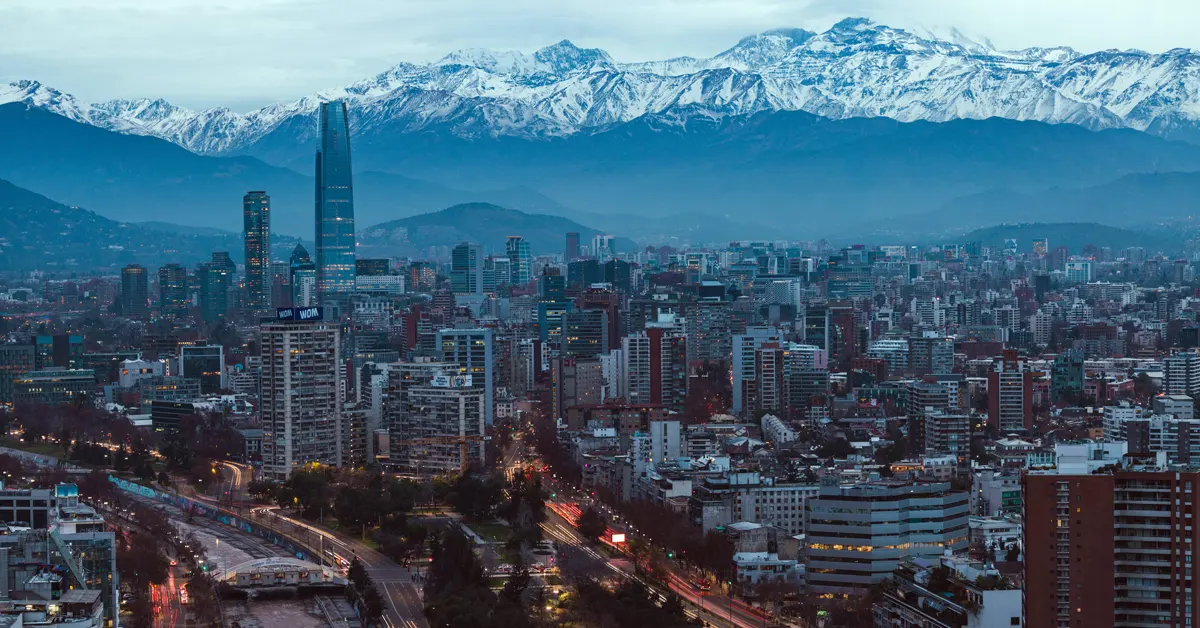
Regional performance trends demonstrated significant operational divergence across geographical sub-markets, reflecting distinct demand drivers between commercial capital centers, corporate resource extraction corridors, and seasonal leisure destinations. The Santiago Metropolitan Region (Región Metropolitana de Santiago) served as the primary performance driver, posting an annual average hotel room occupancy rate of 58.4%, up 3.2 percentage points relative to 2024. ADR within the capital destination cluster reached CLP 92,100, which translated to a RevPAR of CLP 53,786, supported by the recovery of international business travel, MICE (Meetings, Incentives, Conferences, and Exhibitions) events, and corporate long-stay demand.
Northern mining and industrial sub-markets maintained high structural baseline occupancy. The Antofagasta Region (Región de Antofagasta) recorded an annual average room occupancy rate of 53.1% and an ADR of CLP 71,200, driven by non-discretionary corporate lodging demand tied to copper mining projects, lithium production, and energy infrastructure projects. Conversely, southern leisure destinations experienced heightened seasonality. The Los Lagos Region (Región de Los Lagos) achieved an annual average room occupancy rate of 38.6% with an ADR of CLP 74,800, while the Magallanes and Chilean Antarctica Region (Región de Magallanes y de la Antártica Chilena) recorded an average occupancy rate of 44.2% with an ADR of CLP 135,400, reflecting premium leisure pricing during the peak summer quarter offsetting low winter utilization.
Hotel class segmentation data compiled in the EAT demonstrates that upscale and midscale commercial hotel properties outperformed lower-tier establishments in yield growth. Upscale and luxury hotel assets within urban centers maintained average occupancy rates above 62.0%, leveraging international group bookings and airline crew demand, whereas budget and unbranded regional properties reported average occupancy rates below 35.0%.
3. Supply and Development
Chile’s total accommodation inventory experienced modest expansion across full year 2025. According to the National Registry of Tourism Service Providers (Registro Nacional de Prestadores de Servicios Turísticos) maintained by the National Tourism Service (Servicio Nacional de Turismo – SERNATUR) under the Subsecretariat of Tourism (Subsecretaría de Turismo – ST), total officially registered commercial accommodation establishments reached 6,240 properties nationwide by year-end 2025, encompassing approximately 118,500 available rooms. This represents a net inventory expansion of 1.8% in room capacity relative to full year 2024, driven primarily by individual boutique properties, rural eco-lodges, and selective urban hotel completions rather than large-scale resort developments.
New hotel openings during 2025 remained concentrated in urban corporate centers and established luxury adventure destinations. Commercial project completion data tracked by the Investment Project Survey of the Chilean Chamber of Commerce, Services, and Tourism (Cámara Nacional de Comercio, Servicios y Turismo de Chile – CNC) indicated that approximately 850 new room keys entered active operation across the country during the 12-month period. Key openings included select-service international brand properties in Greater Santiago, alongside boutique luxury properties in destination clusters such as the Atacama Desert and Chilean Patagonia.
Chile Commercial Hotel Supply and Pipeline Summary, 2025
| Indicator / Segment | Volume / Metric |
| Total Registered Commercial Accommodation Properties | 6,240 |
| Total Registered Commercial Room Inventory | 118,500 |
| Estimated New Room Openings Completed During 2025 | 850 |
| Active Hotel Construction Pipeline (Next 12–24 Months) | 2,100 rooms |
Official data regarding registered commercial hotel properties and active inventory figures originate from the National Tourism Service (Servicio Nacional de Turismo – SERNATUR) National Registry of Tourism Service Providers (Registro Nacional de Prestadores de Servicios Turísticos) annual baseline report 2025.
Brand conversion activity and physical property renovations formed a significant portion of capital deployment in 2025 as asset owners prioritized repositioning existing physical structures over ground-up construction amid elevated financing costs. Secondary pipeline tracking provided by Lodging Econometrics (LE) in its Latin America Hotel Construction Pipeline Trend Report indicated that midscale and upscale brand conversions accounted for nearly 35% of total brand additions during the year. Major international hotel groups focused on converting existing independent urban assets in Santiago, Concepción, and Antofagasta to upper-midscale and upscale soft brands to leverage global distribution networks.
The forward hotel construction pipeline for the following 12 to 24 months demonstrates disciplined growth. According to secondary industry estimates from LE, Chile’s forward construction pipeline stands at approximately 18 projects totaling roughly 2,100 rooms. Geographic concentration remains high: over 50% of total pipeline rooms under construction or in final planning are located within the Santiago Metropolitan Region, with upper-upscale, upscale, and midscale chain scales accounting for more than 70% of planned inventory. The remaining pipeline is distributed among northern resource corridors supporting mining infrastructure and niche luxury destinations targeting high-yield international travelers.
4. Operating Environment
Chile’s hospitality operating environment during full year 2025 was characterized by labor cost adjustments, stabilizing headline inflation, and rising energy expenses. According to the National Statistics Institute (Instituto Nacional de Estadísticas – INE), macro-level price normalization consolidated across the 12-month period, providing relative cost predictability for hotel operations following prior volatility.
Headline Consumer Price Index (Índice de Precios al Consumidor – IPC) data published by the INE indicates that full-year 2025 accumulated inflation reached 3.5%, marking a notable reduction from earlier annual peaks and aligning near the Central Bank of Chile (Banco Central de Chile – BCC) target corridor of 3.0%. Price dynamics within hospitality-related sub-categories remained mixed: while transport and general imported inputs experienced lower price pressures, accommodation and restaurant services registered consistent nominal price increases. The INE reported that the restaurants and hotels division within the IPC posted a full-year annual increase of approximately 5.2%, reflecting persistent cost pass-through from food supply chains and operational overheads.
Labor market conditions in the service and accommodation sector faced structural cost expansion, driven by statutory minimum wage increases and broader real wage recovery. The Nominal Wage Index (Índice Nominal de Remuneraciones – IR) and the Nominal Labor Cost Index (Índice de Costos Laborales – ICL) published by the INE demonstrated sustained expansion throughout 2025. For full year 2025, the ICL recorded a year-on-year growth rate of 6.7% across the general economy, with service and hospitality sectors tracking above national averages due to legal adjustments in minimum remuneration thresholds and statutory reductions in the weekly work schedule mandated under national labor law reforms. Real wages (Índice Real de Remuneraciones – IRRR) across all sectors posted continuous annual expansion, increasing employee purchasing power but expanding direct hotel payroll burdens.
Energy expenses represented a secondary cost pressure for hotel operators in 2025. According to electricity tariff tracking and regulatory releases from the National Energy Commission (Comisión Nacional de Energía – CNE), regulated electricity distribution tariffs underwent scheduled upward adjustments during the second half of 2025 following the phase-out of historical utility price stabilization mechanisms. Commercial and industrial electricity consumers experienced average tariff increases ranging between 8.0% and 12.0% depending on geographical zone and voltage category, increasing facility utility expenditures for HVAC and commercial hotel operations.
5. Outlook and Risk Factors
Chile’s commercial hotel industry enters the immediate post-2025 operating environment against a backdrop of moderate macroeconomic consolidation and sustained international tourism demand. Institutional evaluations published by multilateral institutions and official national bodies outline a trajectory characterized by stabilizing top-line yield drivers alongside macroeconomic headwinds.
Forward Economic and Demand Outlook
According to the International Monetary Fund (IMF) World Economic Outlook, real GDP growth for Chile is projected at 0.6%. This represents a significant deceleration relative to the 2.5% expansion recorded in 2025, driven by tighter structural fiscal conditions, moderating domestic consumption, and global commodity price uncertainty. Baseline macroeconomic projections from the Central Bank of Chile (Banco Central de Chile – BCC) in its Monetary Policy Report (Informe de Política Monetaria – IPoM) indicate that domestic inflation will continue converging toward the 3.0% target policy mid-point, allowing monetary policy to maintain an accommodative stance.
Forward demand indicators compiled by the Subsecretariat of Tourism (Subsecretaría de Turismo – ST) project international tourist arrivals to expand at a steady pace, targeting over 6.2 million non-resident visitors. Growth is anticipated to be anchored by intra-regional visitor arrivals from Argentina and Brazil, supported by expanded international air route capacity and bilateral connectivity agreements documented by the Civil Aeronautics Board (Junta de Aeronáutica Civil – JAC). Commercial lodging demand in key metropolitan sub-markets, particularly Santiago, is expected to benefit from a scheduled calendar of corporate conventions, regional trade expos, and international sporting events.
Institutional Risk Assessments
Institutional risk assessments for Chile’s hotel and hospitality sector center on three primary documented risk vectors:
- Labor Cost Trajectory and Statutory Reforms: Documented analyses from the Ministry of Labor and Social Forecast (Ministerio del Trabajo y Previsión Social – MINTRAB) and the Central Bank of Chile highlight ongoing operational cost risk tied to statutory labor law adjustments. The phased implementation of the statutory 40-hour work week policy, alongside potential adjustments to statutory minimum compensation, is projected to maintain upward pressure on direct hotel labor costs and total payroll expenditures.
- Utility Tariffs and Operating Margin Compression: Reports published by the National Energy Commission (Comisión Nacional de Energía – CNE) indicate that scheduled electricity distribution tariff adjustments following the unwinding of historical tariff stabilization funds will continue to elevate utility operational overhead. Property owners and hotel operating companies face compressed operating profit margins where nominal Average Daily Rate (ADR) increases fail to keep pace with fixed operating cost inflation.
- External Macroeconomic Sensitivity and Currency Volatility: The IMF Article IV consultation report for Chile emphasizes vulnerability to external shocks, specifically terms-of-trade volatility in major export commodities such as copper and lithium, coupled with regional exchange rate fluctuations. Sharp real-exchange-rate shifts in neighboring South American economies present a documented downside risk to cross-border leisure travel volume and international visitor spend.
Data Source
- Banco Central de Chile (BCC) — Cuentas Nacionales de Chile: https://www.bcentral.cl/w/cuentas-nacionales-2025
- Banco Central de Chile (BCC) — Informe de Política Monetaria (IPoM): https://www.bcentral.cl/contenido/-/detalle/informe-de-politica-monetaria
- Instituto Nacional de Estadísticas (INE) — Indicador Mensual de Actividad Económica (IMACEC): https://www.bcentral.cl/areas/estadisticas/imacec
- Subsecretaría de Turismo (ST) & Servicio Nacional de Turismo (SERNATUR) — Informe Barómetro de Turismo: https://www.subturismo.gob.cl/estudios-y-estadisticas/informes-barometro/
- UN Tourism — World Tourism Barometer: https://www.unwto.org/un-tourism-world-tourism-barometer-data
- Instituto Nacional de Estadísticas (INE) — Encuesta de Alojamiento Turístico (EAT): https://www.ine.gob.cl/estadisticas/economia/turismo/encuesta-de-alojamiento-turistico
- CoStar / STR Global — Hotel Performance Review: https://www.costar.com/solutions/str
- Servicio Nacional de Turismo (SERNATUR) — Registro Nacional de Prestadores de Servicios Turísticos: https://registro.sernatur.cl/
- Cámara Nacional de Comercio, Servicios y Turismo de Chile (CNC) — Catastro de Proyectos de Inversión: https://www.cnc.cl/estudios/
- Lodging Econometrics (LE) — Latin America Hotel Construction Pipeline Trend Report: https://lodgingeconometrics.com/
- Instituto Nacional de Estadísticas (INE) — Índice de Precios al Consumidor (IPC): https://www.ine.gob.cl/estadisticas/economia/precios/indice-de-precios-al-consumidor
- Instituto Nacional de Estadísticas (INE) — Índices de Costos Laborales (ICL) e Índice de Remuneraciones (IR): https://www.ine.gob.cl/estadisticas/economia/laborales/indices-de-remuneraciones-y-costos-laborales
- Comisión Nacional de Energía (CNE) — Reportes de Tarifas y Precios de Energía: https://www.cne.cl/
- International Monetary Fund (IMF) — World Economic Outlook (WEO): https://www.imf.org/en/Publications/WEO
- Ministerio del Trabajo y Previsión Social (MINTRAB) — Estadísticas Laborales: https://www.mintrab.gob.cl/
- Junta de Aeronáutica Civil (JAC) — Reportes del Tráfico Aéreo: https://www.jac.gob.cl/estadisticas/