

Europe’s weaker aviation outlook challenges the demand assumptions behind hotel budgets. For GMs and executive committees, the decision is where to revise expected room revenue—and what evidence should trigger a change.
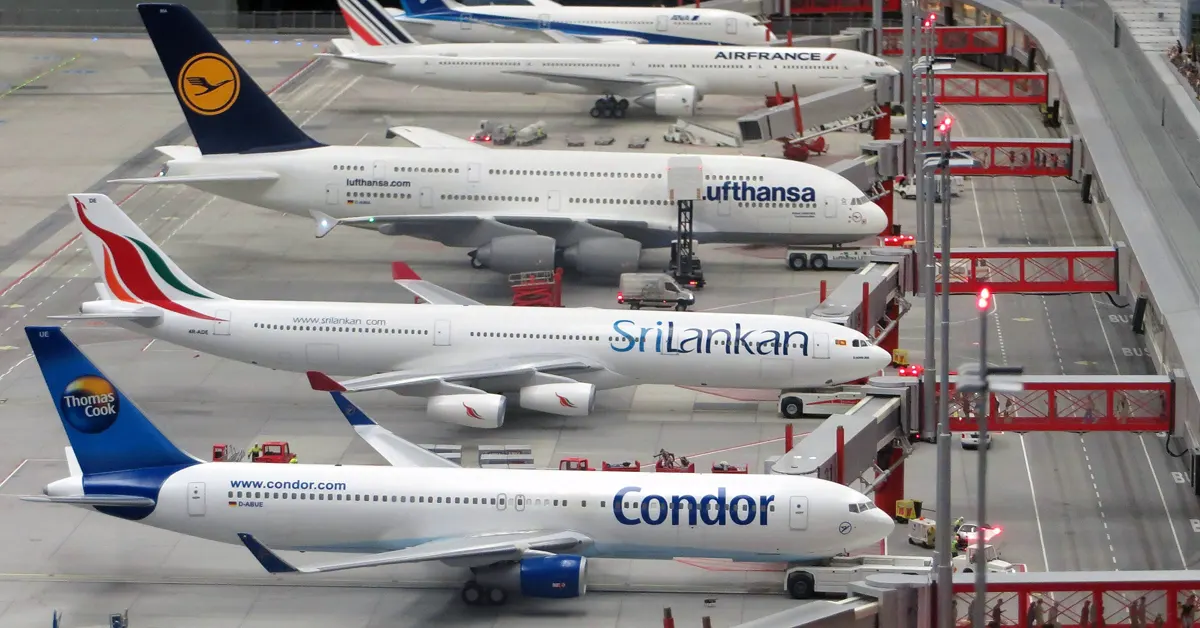
EUROCONTROL has cut its forecast for European flight growth just as hotel operators assess their next budgets. Its Autumn 2026 outlook, published on 20 October, projects 11.2 million flights across the European Civil Aviation Conference area this year, up 1.7%, against the 2.7% growth expected in spring. Middle East tensions have reduced traffic to and from the region, disrupted routings and increased pressure on airline costs.eurocontrol
For hotel executive committees, the relevant change is not a new percentage to insert into the revenue budget. It is a weaker basis for assuming that improving European connectivity will support demand across all destinations.
The appropriate response is to test the exposure behind the room-revenue forecast: which feeder markets, routes and travel segments underpin expected growth, and whether those assumptions still hold.
Table of Contents
1. A weaker network does not mean every hotel should cut rates
The revision removes one percentage point from expected flight growth, not from hotel occupancy. EUROCONTROL’s measure is flights, not arriving hotel guests; the release establishes no conversion between the two.
Its own evidence also resists a uniformly bearish reading. The October assessment describes record daily flight levels and historically high load factors during summer 2026, with sustained demand particularly for southern European destinations. Southern and eastern European aviation markets outperformed major northwestern markets.eurocontrol
An operator should therefore require local evidence before approving either a revenue downgrade or a defensive pricing response. A property whose relevant connectivity and booking pace remain intact has no demonstrated reason to discount solely because the European forecast has weakened.
The reverse also applies. A resilient continental headline would offer little protection to a hotel dependent on a disrupted feeder route. The budget question is whether the traffic being lost overlaps with the guests the property expects to sell to.
2. The 2027 recovery comes with a condition
The more consequential assumption for next year’s budget sits behind EUROCONTROL’s recovery forecast.
In its October release, the agency projects 2027 flight growth of 3.2%, with a range of ±2.0 percentage points, taking traffic to 11.6 million flights. But that recovery begins from a lower 2026 base: broadly unchanged percentage growth does not restore the absolute flight volumes previously expected.eurocontrol
More importantly, the base scenario assumes stabilisation in the Middle East by the end of the first quarter of 2027, followed by a progressive recovery in traffic flows and easing oil prices. The low scenario assumes no resolution before the end of the first quarter of 2028, alongside weaker economic growth and sustained airline-cost pressure.eurocontrol
A hotel budget relying on recovering international demand should make its corresponding assumption explicit. Where that recovery underwrites higher occupancy, stronger negotiated rates or additional operating expenditure, Excom needs to know whether the plan remains viable if connectivity improves later than expected.
EUROCONTROL’s aviation scenarios are not hotel revenue scenarios. They are external conditions against which management can test its own.
3. Budget approval needs a demand bridge, not a blanket haircut
For GMs and operators, the useful output is a reconciliation between the existing revenue plan and the changed aviation outlook.
That reconciliation should separate three decisions:
- Revenue assumptions. Identify the room nights and rate growth dependent on exposed source markets. Distinguish an actual booking shortfall from a risk that has not yet materialised.
- Commercial response. Decide whether weaker demand calls for a change in segment mix, account acquisition or distribution spending before changing public rates. Any intervention should have an explicit net-revenue objective.
- Operating commitments. Identify which expenditure depends on the disputed demand increment, which can be phased, and which remains necessary to deliver the agreed product.
These are proposed management tests, not findings that the EUROCONTROL release proves. Their purpose is to prevent an external warning from becoming either an arbitrary budget cut or an ignored footnote.
The same discipline matters in owner–operator discussions. If management retains its revenue target, it should explain why the property’s demand base is insulated. If it reduces the target, it should identify the affected business rather than cite “European uncertainty” as sufficient justification.
4. Winter schedules are the next test
EUROCONTROL warns that substantial changes to airline winter schedules leave the final 2026 traffic outcome uncertain. It explicitly encourages users to consider its low, base and high scenarios rather than rely on the base case alone.eurocontrol
For hotel management, the next evidence should be more granular: relevant arriving-seat capacity, route continuity and source-market booking pace, assessed against the same stay dates as the budget. Those indicators can establish whether the aviation warning is reaching the property’s demand base.
The decision rule should be agreed before a miss occurs. A sustained deterioration in relevant connectivity accompanied by weaker hotel pickup would strengthen the case for revising revenue and expenditure assumptions. Stable connectivity and resilient pickup would argue for retaining the plan, even against a softer European aggregate.
The forecast has changed. Whether a hotel’s budget should change depends on the demand it can actually lose—and the evidence that loss is beginning.