

Card issuers now move billions of dollars of travel demand a year through portals most revenue teams have never audited, at a commission cost that resembles an OTA’s — without the guest data that a hotel usually gets back from one.
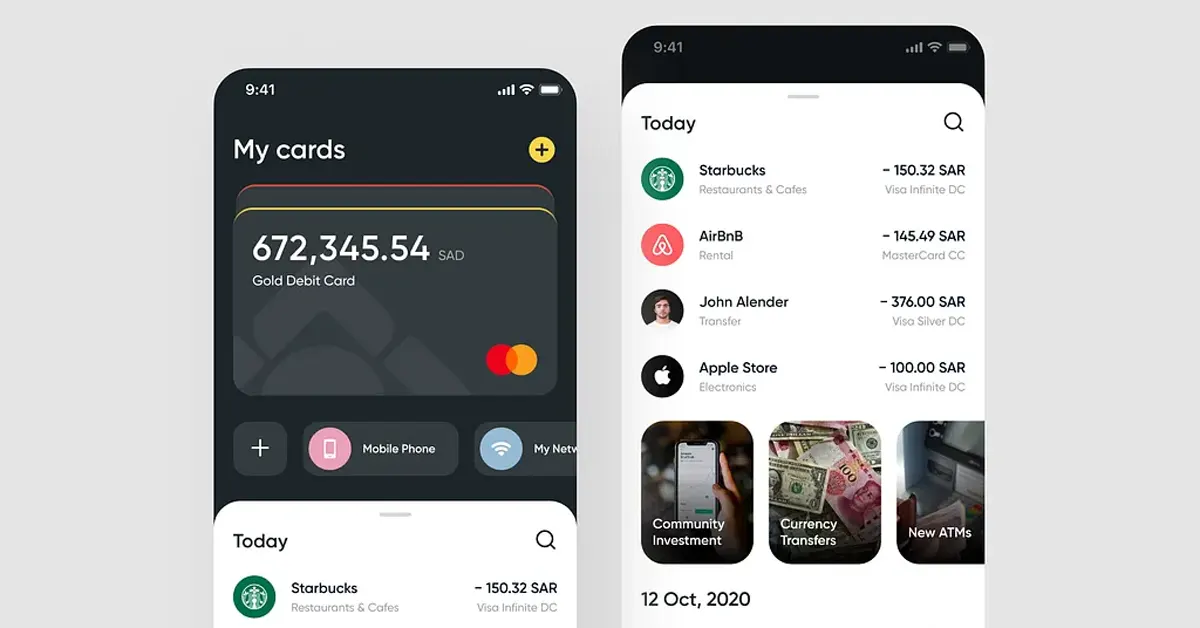
Bank-owned travel portals — Chase Travel, American Express Travel and Capital One Travel chief among them — moved enough volume in 2025 to rank alongside the established players in leisure travel, and none of it appears as a named line in most hotels’ channel-mix reports. Chase Travel booked $13 billion in volume last year, close to triple its 2021 figure, while Capital One says booking volumes on its own portal have grown more than tenfold over the same period. This is not another round of Booking.com-versus-Expedia commission math, and it is not a story about AI agents reshaping search. It concerns a distribution channel built inside a bank’s rewards infrastructure, funded by card economics rather than travel-agency economics, and — in a growing number of cases — stocked with hotel inventory that arrived there through a wholesale contract the hotel signed with somebody else. For a GM reconciling this month’s channel mix, or a revenue manager checking commission statements against production, the operating question is not whether these portals matter. It is whether the property already has exposure to one, at what rate, and who is holding the resulting guest record.
Table of Contents
1. The Portal Runs on Someone Else’s Infrastructure
None of the three major bank-owned portals was built from scratch. Each licenses, or until recently licensed, its booking technology and hotel content from a small number of third-party travel infrastructure providers — the same providers that also carry wholesale hotel inventory for other clients. Capital One Travel launched in 2021 running on Hopper Technology Solutions (HTS), Hopper’s business-to-business division, and Capital One was HTS’s first client. That arrangement changed in the first half of 2026: Capital One paid to bring the technology, roughly 150 staff, licenses, servicing contracts and supplier relationships in-house, though Hopper continues supplying certain fintech features under a revised commercial agreement. Chase’s Ultimate Rewards travel portal was rebuilt in 2018 on Expedia Partner Solutions, giving Chase cardholders access to Expedia Group’s lodging inventory, and Chase Travel Group has since layered proprietary capability on top of that base through acquisitions including cxLoyalty and the luxury travel agencies Frosch and Valerie Wilson Travel. Meanwhile Booking Holdings — parent of Booking.com, Agoda and Priceline — is consolidating its own wholesale arm into a single unit called Booking Partner Services, whose disclosed clients already include Citi Travel alongside Apple, Microsoft, American Airlines, Southwest, Lufthansa and Air France-KLM.
The pattern is not confined to the United States. HSBC launched a Hopper-powered travel portal for its India cardholders in August 2025, offering accelerated rewards on hotel bookings through the same infrastructure category used domestically by Capital One. U.S. Bank took a comparable path in late 2024, launching a travel center built on Rocket Travel by Agoda — the Booking Holdings unit that also supplies the technology behind hotel add-ons at Southwest’s and American Airlines’ checkout flows. In each case, a hotel’s contractual relationship is with an OTA, a wholesaler, or a technology intermediary — not with the bank whose app the room ultimately appears in.
The commercial consequence is that a net rate a hotel negotiates with a single OTA or bedbank can, in principle, be resold across several bank-app and airline-checkout storefronts the property never separately contracted with, at a markup or discount it does not set and frequently cannot see. Because the booking originates inside a banking app rather than a recognisable OTA login page, it often does not register as a distinct line in a hotel’s PMS or channel-mix reporting; at the property level it can be indistinguishable from ordinary wholesale business, if it registers at all. Nobody currently publishes a hotel-specific figure for how much of this volume is rooms rather than flights, cars or activities — Chase, Amex and Capital One all report whole-platform booking volume, not a lodging breakout — so the true room-night exposure remains genuinely unmeasured rather than merely unpublicised. That absence of a number is itself the finding: a channel this size should not be this hard to size.
Worth checking is whether a property’s own rate appears, and at what price, inside a major bank’s rewards-travel tab or an airline’s hotel add-on at checkout — a five-minute exercise few operators have run. Consumer travel researchers comparing prices across these portals have already documented meaningful discrepancies against direct and OTA rates on the same room on the same night, which suggests the exposure, once checked, is not usually trivial. Also worth tracking is how many additional bank and fintech partners sign onto Booking Partner Services once its migration of Priceline’s existing relationships completes, since each new partner is an additional storefront carrying the same wholesale rate without a new contract to renegotiate.
2. The Volume Is No Longer a Rounding Error
The scale reported by the three main US issuers is now large enough to matter to distribution planning, even accounting for the fact that none of it is hotel-specific. JPMorgan Chase’s 2025 annual report states that Chase Travel is the third-largest consumer leisure travel provider in the United States, with $13 billion in booked volume for the year — up 12% year-over-year and roughly triple its 2021 level — while the bank’s broader “connected commerce” travel-and-shopping platforms captured 5.2% of addressable cardholder spend in 2025, up from 3.0% in 2021.
Table: Chase Travel and Connected Commerce, 2021–2025
| Metric | 2025 | Change since 2021 |
| Chase Travel booked volume | $13 billion | Roughly tripled |
| Year-over-year growth (2025) | +12% | — |
| Share of addressable card spend captured via travel & shopping platforms | 5.2% | Up from 3.0% |
| Share of Chase proprietary card spend booked on the platform | 12% | Up more than 300 basis points |
Source: JPMorgan Chase & Co., 2025 Annual Report (Form ARS), filed with the SEC April 6, 2026.
Capital One’s own disclosures are less granular but point the same direction: a Capital One Travel executive stated in May 2026 that booking volumes have increased more than tenfold since the platform’s 2021 launch, a figure independently echoed by Hopper in its own account of the partnership’s wind-down. American Express, for its part, told analysts on its third-quarter 2025 earnings call that Amex Travel had posted record bookings for the quarter, even as trade coverage of that same call noted Chase Travel had overtaken Amex Travel in total sales the previous year — evidence that the competitive contest among issuers is now being fought publicly, not just internally.
The P&L line this touches is acquisition cost and, more precisely, the portion of it a hotel cannot currently see. A booking arriving through a bank portal typically carries a commission economically comparable to a standard OTA booking, whether that commission is paid explicitly by the hotel or embedded in the wholesale net rate the intermediary already negotiated. What has changed is the volume behind that mechanism: three issuers now report platform growth rates — tripling, tenfold, record quarters — that outpace overall travel demand growth in the same period, meaning the share of total bookings running through this specific mechanism is very likely rising even though no single source states the hotel-only figure. Because this growth is not yet broken out by hotel executives’ own reporting systems, it currently shows up, if at all, as an unexplained shift in an existing OTA or wholesale commission line rather than as its own category — which is precisely why it goes untracked.
What is worth monitoring here is less the absolute numbers, which will keep changing, than the direction and the source: three large card issuers independently describing multi-year, above-market growth in the same category, at a moment when Booking Holdings is simultaneously scaling the wholesale infrastructure that feeds several of these same portals. Independent hotels, which the most recent Cloudbeds benchmark found already send 63.4% of their bookings through OTAs globally — approaching 80% in some markets — have the least room to absorb a new, currently invisible layer on top of that dependence.
3. The Guest Record Stays With the Bank
A guest who books a hotel stay through a bank travel portal typically does not enrol in that hotel’s loyalty programme in the process. Industry guidance to cardholders is consistent on this point: booking through a card issuer’s portal generally forfeits elite-night credit, automatic recognition and the ancillary perks — room upgrades, breakfast, late check-out — a hotel would otherwise extend to a loyalty member booking direct, because the reservation is intermediated by the bank’s own booking system rather than made through the hotel’s or brand’s channel.
This is where the commercial consequence differs from a conventional OTA booking rather than merely repeating it. An OTA booking already costs a hotel a commission and, in most markets, the guest’s contact details; a bank-portal booking costs the same commission while also foreclosing loyalty enrolment, since the guest’s payment relationship and travel history sit inside the bank’s cardholder data, not the hotel’s customer relationship management system. The practical effect touches two separate lines: acquisition cost, which is unchanged from an OTA booking, and lifetime guest value, which is reduced further than an OTA booking because there is no loyalty number to capture even after the stay. A hotel that treats bank-portal volume as ordinary OTA business is, in that respect, understating what it is giving up.
There is a partial exception, and it is worth being specific about it rather than treating the category as uniformly adverse. Each issuer maintains a curated luxury collection — American Express’s Fine Hotels + Resorts and The Hotel Collection, Chase’s The Edit, and Capital One’s Premier and Lifestyle Collections — through which participating hotels receive elevated benefits (experience credits, room upgrades, guaranteed early check-in) that some properties treat as a genuine value exchange rather than pure leakage, and where card-member spending patterns skew toward higher average rates. Being included in one of these collections is a choice a hotel or brand makes, in contrast to the undifferentiated wholesale exposure described above, which is not. The distinction some operators are already drawing is between curated-collection participation, negotiated and visible, and open wholesale exposure, neither negotiated nor visible — and treating those as two different channels for reporting purposes rather than one.
4. Parity Rules Were Not Built for This Layer
Regulatory attention to OTA rate parity has moved further than most hotel executives may have registered, but it has moved on a different plane than the one bank portals occupy. The European Court of Justice ruled in September 2024 that both wide and narrow parity clauses in Booking.com’s hotel contracts are not exempt from EU competition law as ancillary restraints, and the European Commission — having designated Booking.com a “gatekeeper” platform under the Digital Markets Act — required Booking to strip parity clauses from every European contract by December 2024, restoring hotels’ legal ability to price lower on their own direct channels within the EU and EEA.
None of that ruling reaches the wholesale layer described above. The parity obligation that was removed governed the direct contractual relationship between a hotel and Booking.com; it says nothing about the net rate a hotel hands to a bedbank or wholesaler, which can still be repackaged and resold through Booking Partner Services, Rocket Travel by Agoda, Hopper’s HTS, or Expedia Partner Solutions into a bank app or airline checkout with no parity clause in force at all, because there is no direct contract there to regulate. A hotel can be in full compliance with, and benefiting from, the new EU parity freedoms on its direct relationship with Booking.com while its wholesale rate is still being marked up or down inside a banking app it has never audited, in a market the DMA ruling was never designed to cover.
What is worth watching is whether regulators or trade bodies extend scrutiny from the direct OTA contract to the wholesale layer that increasingly feeds these bank and fintech storefronts — a question no regulator has yet opened formally, as distinct from the well-documented direct-parity cases against Booking.com now working through European courts and competition authorities. Until that happens, the tools hotels already use to police rate parity — built to compare a direct website against Booking.com and Expedia — have no equivalent for a channel that does not present itself as an OTA, does not sit in a hotel’s extranet, and was not, in most cases, a channel the hotel chose to be in.