Description
A Strategic Architecture for Hotel Financial Governance
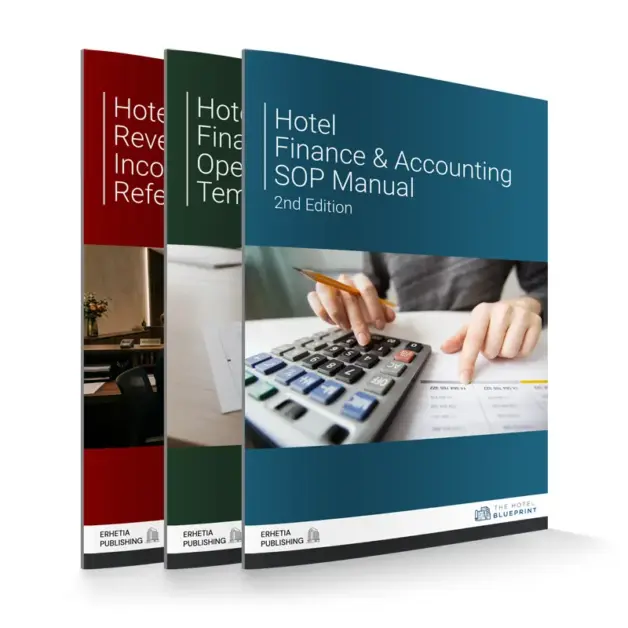
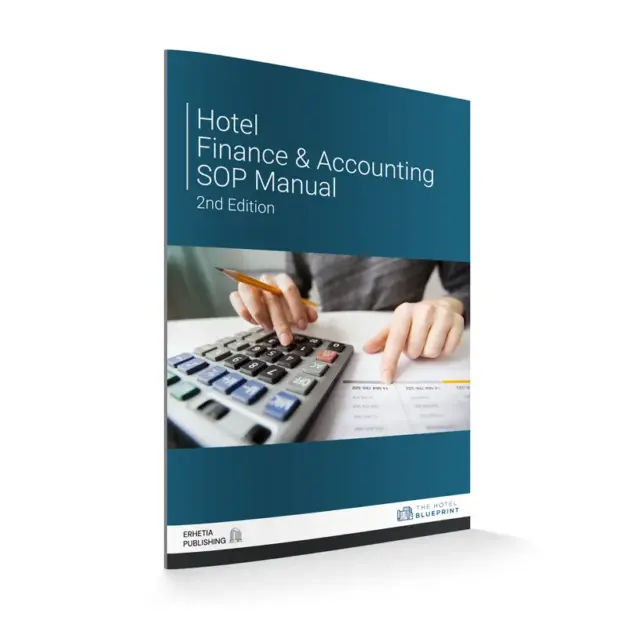
A comprehensive Standard Operating Procedures (SOP) manual designed for hotel finance and accounting departments, including form templates.
It establishes a rigorous framework for daily financial cycles, including accounts payable, receivables, and cash management, while emphasizing strict internal controls such as dual-custody and segregation of duties.
The documentation covers essential hospitality functions like guest deposits, food and beverage cost control, and the management of fixed assets. Additionally, the manual outlines mandatory reporting requirements, monthly closing schedules, and payroll administration to ensure fiscal transparency and accuracy.
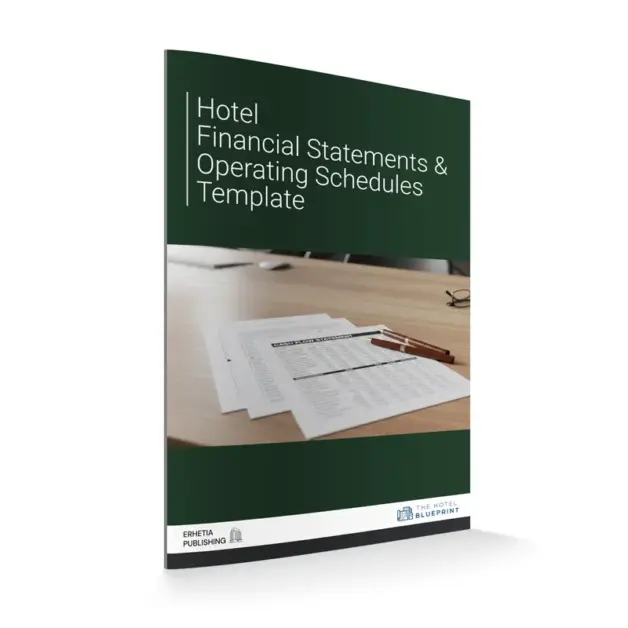
Working templates are included to standardize documentation for various financial tasks, from petty cash vouchers to bank reconciliations. Ultimately, the source serves as a professional blueprint for property financial controllers to maintain standardized, auditable, and efficient accounting operations.
Strengthen Your Revenue Controls
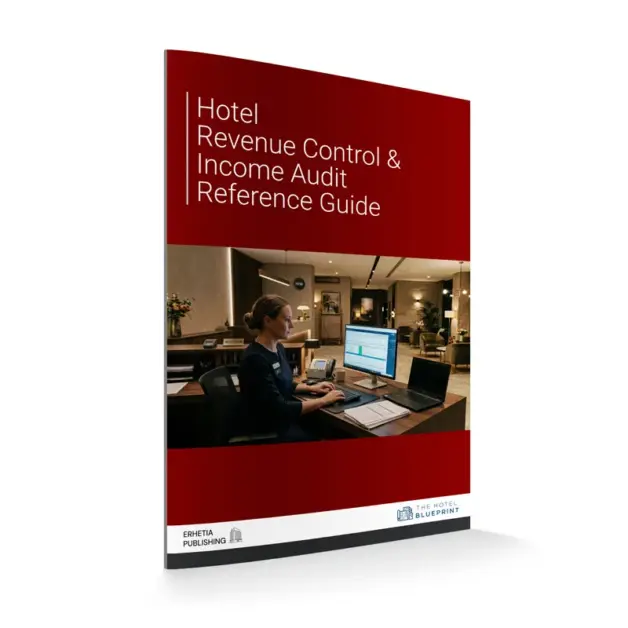
For comprehensive financial governance, pair this SOP Manual with our Hotel Revenue Control & Income Audit – Reference Guide + Templates.
Key Operational Benefits
- Standardization & Consistency: Establishes a “professional standard” across the property, ensuring that tasks like cash handling and month-end closing are executed identically by every staff member on every shift.
- Accelerated Onboarding: Significantly reduces the time spent on “informal knowledge transfer” by providing new hires with an authoritative reference they can follow independently from day one.
- Rigorous Internal Controls: Implements critical safeguards, such as segregation of duties in payroll and purchasing, and dual-custody controls for the hotel safe, to prevent fraud and misappropriation.
- Operational Troubleshooting: Serves as a go-to guide for “non-routine” situations, providing clear policies for complex issues like disputed vendor invoices, foreign currency variances, and doubtful debt reviews.
- Audit Readiness: With 14 ready-to-use templates—including bank reconciliations and asset removal forms—the manual ensures all financial activities are documented in a format that satisfies internal and external auditors.
- Real-World Application for Students: It provides a brand-agnostic look at how the Uniform System of Accounts for the Lodging Industry (USALI) is applied in a real 3-to-5-star hotel environment, moving beyond textbook theory
Preview
Cash Float – Standard Operating Procedure (SOP)
| Department/Division: Finance/Accounting | Code: FA-006 | Total Pages: 2 |
Objective
To ensure that all hotel cash floats are properly authorized, safely maintained, appropriately sized to operational needs, and subject to regular documented controls.
Policy
- All hotel floats must be authorized by management, and a House Bank Agreement (Template T-01) must be signed by every individual assigned responsibility for a float.
- Cash drawers must be locked whenever unattended. Each cashier is assigned their own individual cash drawer. No two individuals share access to the same cash drawer, as shared access compromises accountability for any shortage.
- The float amount is always maintained at the authorized level. Floats are sized to the minimum required for proper departmental functioning and may be adjusted seasonally or by responsibility level, but any change requires a new or updated House Bank Agreement.
- Unexpected spot counts on all hotel floats are conducted regularly by Finance staff.
Procedure
1. Float Types
Two types of float operate in the hotel:
- Rotating float: Not attributed to a single individual but transferred between cashiers at each shift change. This system is preferred where feasible, as it minimizes the total cash held on premises and requires cashiers to formally balance the float at every handover.
- Individual float: Attributed to a named individual who is solely responsible for it throughout their period of assignment.
2. Float Attribution
2.1 All float funds are issued through the General Cashier. Prior approval of the Financial Controller and General Manager is required before any float is established or its amount changed.
2.2 A House Bank Agreement (Template T-01) must be signed by every individual assigned a float. The agreement is updated each time the float amount changes. When a float holder changes assignment, the agreement is formally cancelled, the float is returned, and a new agreement is issued to the incoming holder if applicable.
2.3 The General Cashier is responsible for ensuring that all responsibility forms are current, that an up-to-date file is maintained, and that the sum of all outstanding float receipts equals the float balances recorded in the General Ledger.
3. Float Transfer Controls (Rotating Float)
3.1 All shift-to-shift float transfers are conducted formally. The incoming cashier counts the float in the presence of the outgoing cashier before accepting it. Both cashiers sign the Cash Float Transfer Record (Template T-03), which records:
- Total cash on hand being transferred, itemized by denomination
- Total discrepancies (authorized float amount minus actual cash on hand), itemized
3.2 Any discrepancy identified at transfer must be immediately reported by the outgoing cashier to the relevant Head of Department and the Financial Controller. The discrepancy is recorded in the transfer book and the cashier is responsible for providing a written explanation.
4. Individual Float Controls
4.1 When an individual float is taken out of service at the end of a shift or working day, the cashier performs a formal count of the float in the presence of a witness, records the result on the Cash Float Count Sheet (Template T-02), and places the float in the assigned safe deposit box. The cashier retains the key on their person at all times while on duty. No cashier may remove a float from the hotel premises under any circumstances.
4.2 Any discrepancy between the counted amount and the authorized float level is recorded on the count sheet and reported to the Head of Department and Financial Controller.
5. Surprise Float Counts
5.1 Surprise counts of all hotel house funds — including the General Cashier’s house bank — are conducted by Finance staff at least once per month. Counts are carried out at times and dates unknown in advance to the cashier, to reduce the opportunity to cover any deficiency.
5.2 Counts are performed in the presence of the cashier responsible for the float at the time of the count. The count sheet (Template T-02) records all items found at the cash point:
- Currency notes and coins by denomination
- Foreign currency notes
- Personal checks (if permitted)
- Traveler’s checks
- Petty cash vouchers (General Cashier’s house bank only — approved vouchers only)
- Paid-out vouchers (approved vouchers only)
5.3 Any overage or shortage is recorded and signed by both the cashier and the Finance staff member conducting the count. The Head of Department is responsible for following up on discrepancies. The completed count sheet is submitted to the Financial Controller for review and filed by the General Cashier once approved.