

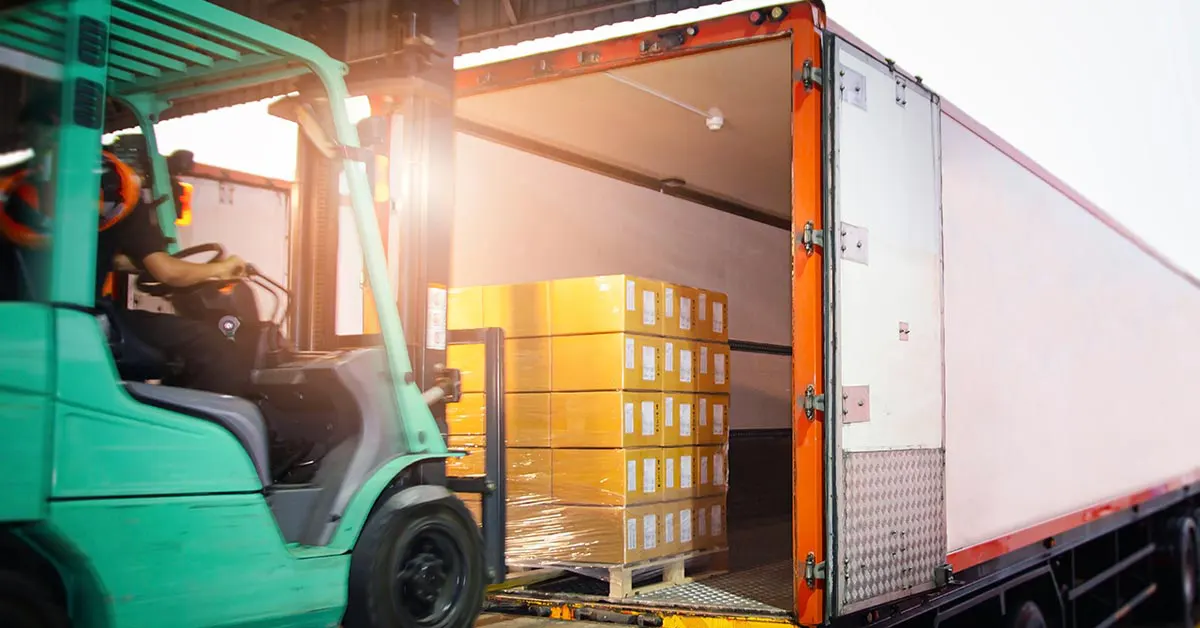
It’s 6:15 a.m. A refrigerated truck backs up to the loading dock behind a hotel’s kitchen. Inside are forty cases of items the property ordered three days ago: fresh salmon, dairy, produce, cleaning chemicals, and a pallet of wine for that evening’s banquet. Somewhere between the driver opening the truck doors and that salmon eventually reaching a guest’s plate, someone has to decide: is this actually what we ordered, is it safe, and is it still in good condition?
That decision point — the moment goods move from a supplier’s truck into the hotel’s possession — is called the receiving process. It sounds like a minor administrative step, the kind of thing that happens in the background before the “real” work of hospitality begins. In practice, it’s one of the few moments in a hotel’s entire operation where a single missed check can lead directly to a guest getting sick, a kitchen running out of a menu item mid-service, or a property quietly losing thousands of dollars a month without anyone noticing why.
This article explains what the receiving process actually involves, why it exists, and what good receiving looks like in a real hotel or restaurant — no prior hospitality background required.
Table of Contents
– What the Receiving Process Actually Is
The receiving process is the set of checks a hotel or restaurant performs when goods arrive from a supplier, before those goods are accepted into inventory. It covers everything ordered for food and beverage operations, housekeeping, engineering, and guest amenities — from fresh fish and produce to linens, cleaning chemicals, and office supplies.
At its simplest, receiving answers four questions every time a delivery shows up:
- Did we actually order this?
- Did we get the right quantity?
- Is it in the condition it’s supposed to be in?
- Is the paperwork correct, so we pay the right amount?
If the answer to any of those is “no,” the goods either get corrected on the spot — a case gets removed from the order, a price gets flagged — or they get rejected outright and sent back with the driver.
It’s worth being precise about where receiving sits in the bigger picture, because the term gets used loosely. Receiving is not the same as purchasing (deciding what to buy and negotiating the deal with a supplier), and it’s not the same as inventory management (tracking and controlling stock once it’s already inside the building). Receiving is the checkpoint in between: the moment goods cross from “the supplier’s responsibility” to “the hotel’s responsibility.” Everything that happens after that line — storage, rotation, use in the kitchen, eventual sale to a guest — inherits whatever quality and safety condition the goods were in when they were accepted.
That’s really the whole logic of receiving in one sentence: you cannot fix a problem with an ingredient after you’ve already accepted it, cooked it, and served it. Receiving is the only point where a bad delivery can still be stopped for free.
Who actually does this work varies by property size. In a large hotel, there’s often a dedicated receiving clerk or a small receiving team whose entire job is inspecting deliveries and managing the loading dock. In a smaller hotel or an independent restaurant, the task usually falls to a steward (a kitchen support role responsible for storage, cleanliness, and receiving) or even a sous chef who happens to be on an early shift. The job title changes; the checks that need to happen don’t. What matters is that whoever is on the dock has been trained on the checks, has the authority to reject a delivery, and isn’t so overloaded with other tasks that receiving becomes an afterthought squeezed between other jobs.
– Why Hotels and Restaurants Can’t Skip This Step
It would be easy to assume that a supplier’s job is to send correct, safe, good-quality goods, and that a hotel’s job is to use them. In reality, a lot can go wrong between a supplier’s warehouse and a hotel’s back door, and none of it is visible from the outside of a sealed box.
A few examples of what receiving is actually guarding against:
- Temperature abuse in transit. Perishable food needs to stay within a safe temperature range throughout transport. If a refrigerated truck’s cooling unit failed two hours before arrival, or the driver made extra stops with the doors open, the product can sit in what food safety professionals call the “danger zone” — roughly 5°C to 60°C (41°F to 140°F) — long enough for bacteria to multiply to unsafe levels, without a single visible sign of it.
- Substitutions and shortages. A supplier who is out of stock on an item sometimes substitutes a similar product, or simply ships less than what was ordered, expecting the difference to be sorted out later. If nobody checks, the kitchen finds out it’s short ten pounds of shrimp in the middle of dinner service.
- Damaged or contaminated packaging. A torn poultry bag, a dented can with a bulge (a sign of dangerous bacterial gas buildup), or a chemical delivery with a leaking container are all things a receiving check is designed to catch before the item goes into storage next to other food.
- Billing errors. Suppliers make mistakes too — wrong unit prices, wrong quantities on the invoice versus what’s actually on the pallet, or charges for items that were never delivered at all. Without receiving as a checkpoint, these errors go straight into the hotel’s accounts payable and get paid.
None of these are rare, dramatic events. They are the ordinary, unglamorous risks of any supply chain, multiplied by the fact that a hotel or restaurant might receive deliveries from a dozen or more suppliers every single day. Receiving exists because the alternative — trusting every delivery by default — eventually produces a foodborne illness incident, a costly billing error, or a menu item that has to be pulled at the last minute.
– The Core Checks Every Delivery Should Pass
A proper receiving process is really a sequence of checks, done in order, for every delivery. Different hotels format this differently, but the underlying checks are consistent across the industry.
1. Order verification
Before anything else, the person receiving the delivery confirms that this delivery was actually requested — matching it against a purchase order (the internal document that records what was ordered, from whom, in what quantity, at what agreed price). This step catches deliveries that were sent by mistake, duplicate orders, or goods from a supplier the hotel never authorized. Many hotels also check the delivery against a product specification sheet — a short internal document describing exactly what “correct” looks like for a given item: the grade of beef, the size range for shrimp, the fat content of a dairy product, or the brand and pack size expected. Without a spec sheet, “did we get the right product” becomes a matter of opinion; with one, it’s a simple comparison.
2. Quantity check
Every item on the delivery gets counted — not estimated, counted — against both the purchase order and the supplier’s delivery note or invoice. This sounds tedious, but it’s the check that catches shortages before they become a service problem, and overages before the hotel accidentally pays for cases of product it never asked for.
3. Quality and visual inspection
This is where the receiver actually looks at, and often touches or smells, the product itself. For food, that means checking color, texture, smell, and signs of damage — bruised produce, wilted greens, cracked eggs, torn packaging, or fish with cloudy eyes and a strong “off” odor rather than a clean, mild sea smell. For non-food items, it means checking for damaged boxes, broken seals, or products that don’t match the specification the hotel ordered (the wrong thread count on linens, for example, or cleaning chemicals in the wrong concentration).
4. Temperature check
For perishable items, someone takes an actual temperature reading with a calibrated thermometer at the moment of delivery — not a guess based on how cold the box feels. Frozen goods typically need to arrive at -18°C (0°F) or below and still frozen solid, not just cold. Refrigerated goods generally need to be at or below 4°C (about 40°F). If a delivery arrives outside these ranges, it’s a rejection, regardless of how the product looks or smells, because the risk isn’t visible — it’s bacterial growth that’s already happened and won’t show up until later.
5. Packaging and labeling check
Every item needs correct, legible labeling: what it is, when it was produced, its expiration or use-by date, and — for allergens — clear ingredient information. This check also covers whether the packaging itself is intact and appropriate for the product (no torn vacuum-seal bags, no leaking containers, no signs of pest activity like gnaw marks or droppings on the packaging).
6. Documentation and paperwork
Finally, the receiver checks that the invoice matches what was actually delivered: correct pricing per the agreed contract, correct quantities, and correct product codes. Any discrepancy gets noted immediately, in writing, with the driver still present — because once the driver leaves, there’s no independent witness to what was actually on the truck.
Each of these six checks is a separate opportunity to catch a different type of problem. A delivery can pass the quantity check and still fail the temperature check. It can look perfect and still have the wrong price on the invoice. That’s why receiving isn’t a single “yes/no” glance at a delivery — it’s a short but structured sequence, ideally with a checklist, so that no single check gets skipped because the receiver is in a hurry.
– What This Looks Like in a Real Hotel
The checks above are easier to picture with real scenarios. Here’s how receiving actually plays out across a few different parts of a hotel.
Scenario 1: The early-morning produce delivery. A steward (the kitchen staff member responsible for receiving and storage) is on the loading dock at 6 a.m. for a produce delivery. The order was for 20 kg of tomatoes, 10 kg of mixed greens, and 15 kg of onions. The steward counts each case against the delivery note, checks the tomatoes aren’t bruised or overripe, confirms the greens aren’t wilted or slimy at the edges (a sign of age or improper storage), and notices one case of onions has visible mold on several pieces. That case gets set aside and refused; the rest is accepted, weighed, and moved directly into cold storage — not left sitting on the dock, where the temperature clock keeps running against the product.
Scenario 2: The banquet wine order. A large function is booked for that evening, and 30 cases of a specific wine were ordered for it. On delivery, the receiver counts only 27 cases. Rather than accepting the shortage and hoping it works out, the receiver notes the discrepancy on the delivery note, has the driver sign acknowledging it, and immediately alerts the beverage manager so a backup plan — substituting a similar wine, or placing an emergency order with another supplier — can happen with hours of lead time instead of being discovered during the event itself.
Scenario 3: The chemical and amenities delivery. Not everything received is food. A delivery of guest-room amenities and housekeeping chemicals arrives at the same time as the kitchen order. The receiver checks that the chemical containers are sealed and correctly labeled with safety information (a legal requirement in most jurisdictions, tied to what’s often called a Safety Data Sheet, or SDS, which describes how to handle a chemical safely). A leaking container of a cleaning concentrate is rejected on the spot rather than stored next to other supplies, where a leak could contaminate anything nearby.
Scenario 4: The invoice that doesn’t match. A seafood supplier delivers exactly what was ordered, in good condition, on time. But the invoice lists a price per kilogram that’s 15% higher than the price in the hotel’s standing agreement with that supplier. The receiver accepts the product — there’s no food safety issue — but flags the invoice discrepancy before it goes to accounts payable, preventing the hotel from simply paying the inflated price by default.
What these scenarios share is that none of them involve a dramatic failure. They’re the routine, five-minutes-per-delivery decisions that, multiplied across dozens of deliveries a week, either protect a hotel’s guests and budget or quietly erode both.
– Receiving Isn’t Just a Kitchen Task
It’s easy to picture receiving as something that only happens at the back door of the kitchen, but a hotel receives far more than food and beverage. Housekeeping, engineering, and guest services all rely on the same underlying checkpoint, even though the specific things being checked look different.
Linens and housekeeping supplies. A hotel might receive a shipment of a thousand bath towels or several hundred sets of sheets at once. Receiving here means counting against the order, checking the thread count and size match the specification, and inspecting a sample for manufacturing defects — because a flaw that isn’t caught now might not surface until housekeeping unpacks the last box weeks later, long after the supplier’s return window has closed.
Engineering parts. A replacement pump for the pool system, an HVAC component, or a box of light fixtures all go through the same order-verification and quantity checks as a food delivery. The stakes are different — nobody’s health is on the line if a light fixture is the wrong wattage — but the financial logic is identical: catching the wrong part at the door is a quick exchange, while catching it after installation is a delay and an extra service call.
Guest amenities and chemicals. As the earlier scenario showed, cleaning chemicals and guest-room amenities carry their own risks: leaking containers, incorrect concentrations, or missing safety documentation. Because many of these products are classified as hazardous materials, receiving staff typically need to confirm that a Safety Data Sheet (SDS) — the standardized document explaining a chemical’s risks and safe handling — is on file before the product goes into storage, and that it’s stored away from food items entirely.
The common thread across all of these is that receiving isn’t a food-safety-only function; it’s a general risk-control function that happens to matter most, and most visibly, in food and beverage.
– Building a Receiving Process That Works
Knowing what to check is one thing. Building a process that reliably gets those checks done, delivery after delivery, without depending on any one person’s memory or good mood that morning, is the harder part.
Put it in writing. A receiving process that lives only in an experienced steward’s head disappears the day that person is on vacation or leaves the company. Hotels that do this well have a written receiving checklist or standard operating procedure (SOP) that spells out exactly what to check, in what order, and what to do when something fails a check.
Use a receiving log. Every delivery gets logged — what arrived, when, temperature readings, any discrepancies, and who received it. This isn’t paperwork for its own sake; it’s the record that lets a hotel go back and spot patterns, like a specific supplier that consistently short-ships orders or delivers produce close to spoiling.
Assign clear responsibility. Receiving should never be “whoever happens to be near the loading dock.” Most well-run kitchens designate specific staff — often stewards or a dedicated receiving clerk in larger properties — who are trained specifically on these checks, including how to use a thermometer correctly and what visual signs of spoilage or damage actually look like.
Have a real rejection protocol. Staff need explicit authority and a clear process to reject a delivery, on the spot, without needing to track down a manager for approval first. If rejecting a delivery requires a lengthy escalation, staff under time pressure will often just accept the goods rather than deal with the hassle — which defeats the entire purpose of the check.
Move perishables to storage immediately. A delivery that passes every check on the dock can still be compromised if it then sits at room temperature for 40 minutes because the kitchen was busy. Best practice is that refrigerated and frozen goods go into proper storage within a defined, short window — often 15 to 30 minutes — right after inspection.
Follow FIFO in storage. Once accepted, goods should be stored using FIFO — First In, First Out — meaning older stock gets placed at the front and used before newer stock. This is technically part of inventory management rather than receiving itself, but it only works if receiving is doing its job of confirming and dating incoming product correctly at the point of entry.
Common mistakes
A few mistakes show up repeatedly in properties where receiving isn’t working well:
- Receiving without a scale or thermometer nearby, so quantity and temperature checks become guesswork.
- Accepting deliveries during peak rush, when whoever’s available is too busy to do a proper inspection, and pressure to “just get it put away” overrides the checklist.
- No back-up plan for rejected goods, which creates pressure to accept subpar product simply because there’s no time to source a replacement.
- Treating receiving as purely a food safety task, and neglecting the price and quantity checks that protect the budget rather than the guest.
- Inconsistent training across shifts, so the Tuesday morning receiver and the Saturday morning receiver are applying different standards without anyone noticing.
Most of these aren’t failures of intent — nobody is trying to let bad product through. They’re failures of structure: the process exists on paper but isn’t actually built into the daily workflow in a way that survives a busy morning.
Where technology fits in
A growing number of hotels are supplementing manual checks with tools that make receiving faster and harder to skip. Barcode or QR-code scanning lets a receiver check a delivered item against the purchase order in seconds rather than manually cross-referencing a paper list. Digital invoice-matching software can automatically flag a price that doesn’t match the agreed contract rate, catching the kind of billing discrepancy that’s easy to miss when a receiver is scanning a long invoice by eye. Digital temperature loggers, some built into the delivery truck itself, can provide a continuous record of the product’s temperature throughout transit, not just a single reading taken on the dock — which matters, because a product can recover to a safe-looking temperature by the time it arrives even after spending an hour too warm along the way. And a simple photo taken at the moment of receiving — of a damaged case, an illegible label, or a suspicious delivery note — creates a timestamped record that’s far more useful in a dispute with a supplier than a verbal description written down after the fact.
None of this technology replaces the judgment of a trained receiver. A scanner can confirm that 20 kg of tomatoes arrived; it can’t tell you they’re bruised. The tools work best as a way to speed up and document the checks that a person is still doing, not as a substitute for doing them.
– Why This Small Step Has a Big Impact
It’s easy to think of receiving as a purely operational, back-of-house detail. But the quality of a hotel’s receiving process has consequences that reach well beyond the loading dock.
Food safety and legal compliance. Most food safety regulation systems — including HACCP (Hazard Analysis and Critical Control Points, a food safety framework used internationally to identify and control risks at each stage of food handling) — treat receiving as a formal “control point,” meaning it’s a stage where a specific, documented check is legally expected to happen. In a health inspection, missing or inconsistent temperature logs at receiving are a common finding, and in the event of a foodborne illness complaint, a hotel’s receiving records are often among the first things investigators ask for. Good receiving records are, in effect, a hotel’s evidence that it did its part.
Financial impact. This is the part that’s easy to underestimate because it doesn’t show up as a single dramatic loss — it shows up as a slow leak. Consider a mid-sized hotel spending $60,000 a month on food and beverage goods. If poor receiving lets through even 3% in spoiled product, short shipments that get paid for anyway, and small invoice overcharges that go uncaught, that’s roughly $1,800 a month, or over $21,000 a year, disappearing without a single visible incident. Multiply that across a hotel group with dozens of properties, and receiving becomes a genuinely material line item, not a rounding error.
Guest experience. A shortage discovered during service — the wine that’s three cases short, the fish that had to be rejected that morning with no backup ordered — becomes a guest-facing problem: an item pulled from the menu, a substitution the guest didn’t expect, or in the worst case, a food safety issue traced back to something that should never have been accepted. Guests never see the receiving dock, but they absolutely experience its failures.
Reputational and insurance exposure. A single confirmed foodborne illness incident traced back to a hotel restaurant can produce consequences well beyond the immediate health inspection — negative reviews, local news coverage in some cases, and higher liability insurance premiums going forward, since insurers price risk partly based on a property’s food safety track record. Thorough, well-documented receiving records are also what an insurer or a court typically looks for as evidence that a hotel exercised reasonable care, which can materially affect liability in the event something does go wrong despite a hotel’s best efforts.
Operational efficiency. A kitchen that trusts its receiving process can plan with confidence — today’s prep list, tomorrow’s menu, this weekend’s banquet order. A kitchen that’s been burned by inconsistent receiving starts building in workarounds: over-ordering “just in case,” double-checking things that should already be checked, and losing time re-verifying what receiving was supposed to verify the first time. Reliable receiving is what lets the rest of the kitchen move fast.
Measuring it. Hotels that take receiving seriously often track a few simple indicators over time, not as abstract corporate metrics, but as practical early-warning signs:
- Rejection rate — what percentage of deliveries get partially or fully rejected, and from which suppliers. A rising rejection rate from one supplier is a signal to have a conversation, or switch suppliers, before it becomes a bigger problem.
- Invoice discrepancy rate — how often the delivered goods and the invoice don’t match, which flags both supplier billing issues and internal training gaps.
- Spoilage linked to receiving — when kitchen staff later find spoiled or substandard product that should have been caught at the door, tracking this points directly at where the receiving process is breaking down.
None of these numbers matter for their own sake. They matter because each one is a proxy for something concrete: are guests safe, is the budget being protected, and is the kitchen getting what it actually needs to do its job.
– The Takeaway
The receiving process is easy to overlook precisely because, when it’s working, nothing happens — no illness, no shortage, no billing dispute, no last-minute menu change. That invisibility is exactly the point. A handful of checks performed consistently, delivery after delivery, are what stand between a hotel’s supply chain and a much more visible, much more costly failure downstream.
Good receiving isn’t about mistrusting suppliers. It’s about recognizing that a lot can happen between a warehouse and a loading dock, and that the moment goods arrive is the last and cheapest opportunity to catch a problem before it becomes the hotel’s problem. Get that moment right, consistently, and almost everything that follows — food safety, cost control, and the guest’s experience — starts from solid ground.