


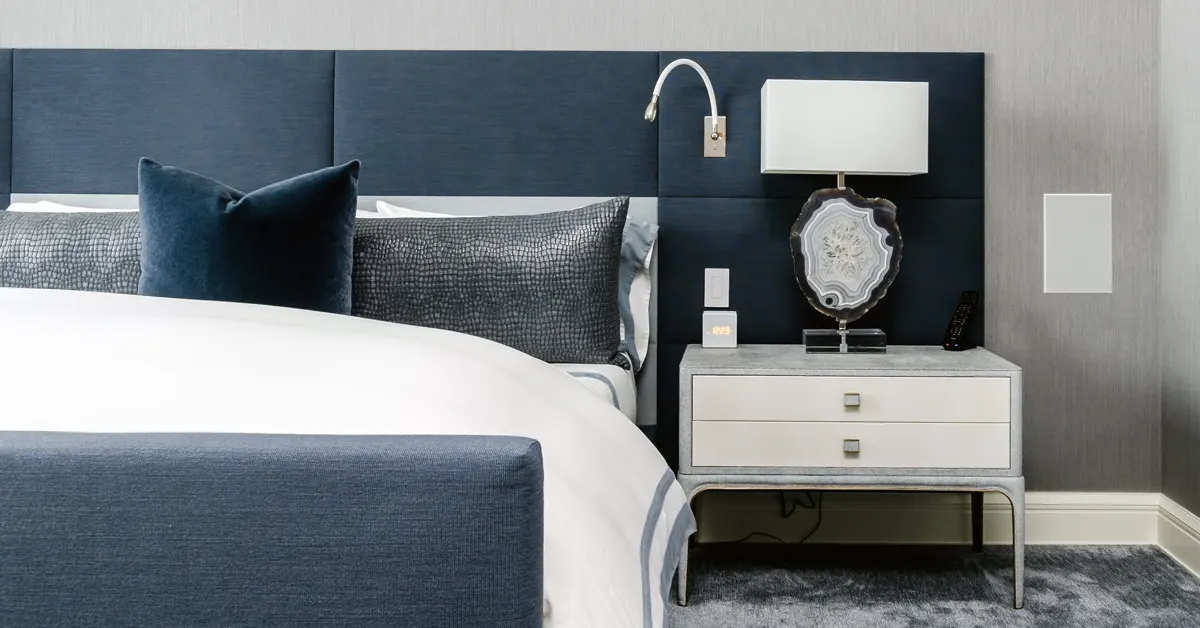
Picture a guest who stayed in a “King Room” in New York, and books a “King Room” in Paris six months later for a work trip, expecting the same generous mattress she remembers. When she checks in, the bed is noticeably smaller — still called a king, still sold as a king, but shorter and narrower than the one back home. She isn’t wrong to be confused, and neither is the hotel: both beds are, technically, kings. The mismatch isn’t a mistake. It’s the result of an entire layer of hotel operations most guests never think about — bedding setup standards — the rules that define exactly what a bed type means, how it is measured, how many guests it can legally and commercially accommodate, and how it gets translated into the room categories sold across booking platforms worldwide.
This article breaks down what bedding setup standards actually are, why the hotel industry relies on them so heavily, what each bed type really measures in different parts of the world, and how all of this quietly shapes room categories, occupancy limits, and the inventory a hotel sells every single night.
Table of Contents
1. What “Bedding Setup” Actually Means in a Hotel Room
In hotel terminology, a “bedding setup” — also called a “bed configuration” or simply “bed type” — refers to the specific combination of bed sizes and bed quantities installed in a guest room. It is not the same thing as a “room type” or “room category,” even though the two are closely linked and frequently confused by guests, and occasionally by junior staff.
A room type — “Standard Room,” “Deluxe Room,” “Executive Suite” — describes the room’s size, view, floor, amenities, and finish level. A bedding setup describes what a guest actually sleeps on inside that room: one king-size bed, two twin beds, a queen bed plus a sofa bed, and so on. The same room type can often be sold with more than one bedding setup. A “Deluxe Room,” for example, might exist in two physical versions in the same hotel: one with a single king bed, another with two twin beds, while everything else about the room — square footage, view category, minibar, bathroom finish — stays identical.
This distinction matters because hotels don’t sell “rooms” in a generic sense. They sell configurations. Every unit of inventory in a hotel’s reservation system is technically defined by both its room type and its bedding setup, because both variables affect who can stay in the room and how many people it can legally and comfortably hold.
Bedding setup standards, then, are the documented rules — usually maintained jointly by the operations and revenue management teams — that specify exactly which bed sizes exist in the property, how each is labeled for sale, what dimensions they correspond to, how many of each configuration exist per room type, and how flexible or fixed that configuration is, meaning whether it can be changed on request, for instance by swapping a king bed for two twins.
2. Why Hotels Bother Standardizing Beds at All
At first glance, bed sizes might seem like a minor detail — the industry could simply call anything “large” or “small” and let guests sort it out at check-in. In practice, without a precise, shared standard, several things break down almost immediately.
The first is guest expectation management. A guest booking online has no way to physically inspect a room before arrival. The only information available is the label attached to it — King, Twin, Queen — plus, sometimes, a photograph. If different hotels, or even different rooms in the same hotel, used the word “king” loosely, the guest’s booking decision would rest on an unreliable promise. Standardizing what each bed type means, at least within a market or a hotel group, lets the label itself carry accurate information.
The second reason is occupancy control. Fire codes, safety regulations, and simple physical space impose a hard limit on how many people can sleep in a room. That limit is calculated, in large part, from the bedding setup: a room with one queen bed is generally rated for two adults; a room with two queen beds might be rated for four; a room with a single twin bed is rated for one. Hotels need bedding standards to calculate maximum occupancy consistently across the property, because this number feeds directly into legal compliance, insurance requirements, and the booking engine’s logic — the system that stops a family of five from booking a room designed for two.
The third reason is inventory management. A hotel’s reservation system does not hold one undifferentiated pool of rooms; it holds separate “buckets” of inventory, one per room type and bedding combination. If a hotel has 40 Standard Rooms, and 25 have a king bed while 15 have two twins, the property needs to track those as two distinct sellable products, because a guest requesting twin beds cannot simply be given a king room without a manual room change. Standardized bedding categories are what make this tracking possible across the front desk system, the central reservation system, and every third-party channel — Booking.com, Expedia, a corporate travel platform — where the room is listed for sale.
Finally, there is a purely commercial reason: bedding drives room description and, indirectly, price. A room advertised with a king bed is often positioned toward couples or solo business travelers, while a twin room is positioned toward friends, colleagues sharing costs, or families traveling with an older child. Some hotels even set slightly different rates for the same room type depending on which bedding configuration a guest selects, because demand for each configuration differs by traveler segment and by market. None of this commercial logic works unless the bedding label is consistent and well understood internally first.
3. The Building Blocks: Bed Types and Their Real Dimensions
This is where “international” becomes the operative word, because bed sizes are not standardized globally. The same name can correspond to different dimensions depending on the country, and the hospitality industry has never adopted one single global convention. What follows are the bed types most commonly used across hotels worldwide, with the dimension ranges typically associated with each. Because manufacturers and countries vary, these should be read as representative industry ranges rather than one fixed figure.
| Bed Type | Typical Dimensions (approx.) | Designed For |
| Twin / Single | 90–99 cm × 190–191 cm (36–39 in × 75 in) | 1 person; sold in pairs as “Twin Room” |
| Full / Double | 137 cm × 191 cm (54 in × 75 in) | 2 people; older or budget properties |
| Queen | 152 cm × 203 cm (60 in × 80 in) | 2 people; near-universal mid-size standard |
| King (US / Eastern) | 193 cm × 203 cm (76 in × 80 in) | 2 people; widest common standard |
| Super King (UK) | 180 cm × 200 cm (71 in × 79 in) | 2 people; UK’s “king” equivalent |
| “King” (Continental Europe) | ~160 cm × 200 cm | 2 people; often two zipped Queen mattresses |
| California King | 183 cm × 213 cm (72 in × 84 in) | 2 people; rare, US luxury properties |
| Extra bed / rollaway | ~90 cm × 190 cm | 1 additional adult or older child; temporary |
| Cot / crib | ~60–70 cm × 120–140 cm | Infant or toddler; doesn’t count toward adult limits |
Twin / Single bed. This is the smallest standard hotel bed, designed for one person. In North America, a hotel “Twin” typically measures around 99 cm × 191 cm. In the United Kingdom and much of Europe, a “Single” bed tends to be slightly narrower, often around 90 cm × 190 cm. Twin beds are almost always sold in pairs — a “Twin Room” conventionally means two separate single beds, not one bed for two people, which is one of the most common points of confusion for international travelers, since in everyday language “twin” can sound like it means “double.”
Full / Double bed. Known in the US as a “Full” and in the UK as a “Double,” this bed is designed for two people but is noticeably narrower than what most travelers now expect from a couple’s bed, at roughly 137 cm × 191 cm. This size has become less common in newer hotel builds as guest expectations have shifted toward Queen as the entry-level option for two-person occupancy, but it still appears in older properties, budget hotels, and some European city-center hotels where room footprints are historically smaller.
Queen bed. This has become something close to a de facto international standard for two-person hotel rooms, even though it originated as an American mattress size. A hotel Queen typically measures around 152 cm × 203 cm. Many hotel groups outside the US have adopted the “Queen” label commercially because it communicates a comfortable, mid-size bed for two people, even where local mattress dimensions differ slightly from the American original.
King bed — and its regional variants. This is where international inconsistency is most pronounced, and it’s worth slowing down here because it explains the New York/Paris scenario from the introduction. A US (“Eastern”) King measures approximately 193 cm × 203 cm — wide enough that it is sometimes physically two Twin XL mattresses pushed together and topped with a single fitted sheet, a configuration called a “Split King,” common in US hotels because it lets housekeeping make up the bed with standard-sized linens and lets engineering move furniture in pieces. A UK “Super King” measures roughly 180 cm × 200 cm — close to, but not identical to, the US King. Meanwhile, many hotels in continental Europe sell a “King” closer to 160 cm × 200 cm, essentially two Queen-size mattresses zipped together, sometimes called a “French King” or simply a wide double. In parts of Asia and the Middle East, hotel Kings frequently follow the US convention more closely, especially in international chain properties, because those markets were built up around American and European brand standards. None of these differences is “wrong” — each is a legitimate King within its regional convention — but together they explain why the same word produces a different physical experience depending on where a guest is staying.
California King. A less common but still notable US variant, longer and narrower than the standard King, at roughly 183 cm × 213 cm. It appears occasionally in luxury US properties designed with taller guests in mind, but it is rare enough internationally that most non-US hotels do not stock it at all.
Extra bed / rollaway bed. This is a temporary, portable bed brought into a room on request, usually to accommodate an additional adult or older child beyond the room’s standard occupancy. Extra beds are almost always narrower than a Twin, often around 90 cm × 190 cm, and are collapsible for storage. Unlike the beds above, an extra bed is not part of a room’s fixed bedding setup; it’s an add-on, usually limited to one per room by both physical space and fire code, and frequently carries its own nightly charge.
Cot / crib. Designed for infants and toddlers, not older children, a cot — the term used in the UK and most international markets — or crib, the US term, is a small enclosed bed with raised sides, typically around 60–70 cm × 120–140 cm. Cots do not count toward adult occupancy limits in most hotel policies, because they’re intended for a child young enough to require supervision rather than an independent sleeping space, but they do count toward the total number of people physically present in the room for safety purposes.
Sofa bed and Murphy bed. Not a traditional bed category, but common enough to mention because it appears constantly in bedding standards documents. A sofa bed folds out from a couch and is often included in suites or family rooms as a way of adding sleeping capacity without adding a permanent bed frame. A Murphy bed, also called a wall bed, folds up vertically into a wall unit, a solution some hotels use in smaller urban properties to let a room function as a lounge by day and a bedroom by night — effectively letting one room carry two different bedding setups depending on how it’s configured at a given moment.
To make bedding configurations fast to reference internally, hotels and reservation systems typically use short codes rather than writing out full descriptions every time. A room with one king bed is commonly coded “1K”; two queen beds, “2Q”; two twin beds, “2T”; one queen plus a sofa bed, “1Q+SB.” These codes appear in property management systems, rate sheets, and sometimes in the technical backend of booking websites, even though the guest-facing description will always spell it out in plain language.
4. From Bed Type to Room Type: How Bedding Shapes the Categories You See on a Booking Page
Once a hotel has defined its bed types, the next layer of the system is deciding how those bed types combine with room categories to create the actual sellable products listed on a booking page. This is where bedding setup standards stop being a back-of-house technical detail and start shaping what a guest actually sees and chooses from.
Most hotels organize their room types along two independent dimensions: a quality or size tier — Standard, Superior, Deluxe, Suite — and a bedding configuration — King, Twin, Queen. A mid-size international hotel might therefore have room categories like “Standard King,” “Standard Twin,” “Deluxe King,” and “Deluxe Twin” — four sellable products built from just two size tiers and two bedding options. Add a Queen option and a Suite tier, and the combinations multiply quickly, which is exactly why hotels rely on rigid bedding standards rather than improvising room by room: without a clear system, a property with even a modest number of room categories could end up with dozens of loosely defined variations that are nearly impossible to track, sell, or staff consistently.
Some hotels build genuine flexibility into this system through what’s often called “bed type on request” or “flexible bedding.” In these cases, a single physical room — same square footage, same layout — can be converted between two configurations, most often King and Twin, using furniture that can be reconfigured: twin beds that push together to approximate a king footprint, for instance, or a room built wide enough to accommodate either arrangement. This flexibility is valuable because it lets one physical room serve two different demand segments without needing separate inventory, but it comes with an operational cost: housekeeping has to physically reconfigure the room between certain stays, which takes time and needs to be scheduled in advance.
Other hotels keep bedding fixed by room number: room 412 is permanently a King, room 413 is permanently a Twin, and the two are never interchanged. This is more common in properties with built-in furniture, fitted carpets around fixed bed frames, or historic buildings where moving furniture isn’t practical. Fixed bedding is operationally simpler, but it means a hotel with too few Twin rooms relative to demand cannot easily solve that imbalance without renovation.
The term “run of house,” which shows up frequently in hotel rate plans, is directly connected to this logic. A “run of house” rate means the guest is guaranteed a room within a certain category, but the specific bedding configuration is assigned by the hotel at check-in based on availability, rather than chosen and confirmed by the guest at the time of booking. It’s a useful tool for hotels managing tight inventory, but it’s also a common source of guest frustration when someone assumed they were confirmed for a King and receives a Twin instead — exactly the kind of mismatch that clear bedding standards, communicated honestly at the point of sale, are meant to prevent.
International hotel brands generally publish internal bedding and room-type nomenclature guides precisely so that a “Deluxe King” in one country carries a broadly similar meaning — same tier, same bed logic — as a “Deluxe King” in another, even while the exact bed dimensions may still shift slightly with local manufacturing norms, as covered in the previous section. Independent hotels and smaller regional groups don’t have that built-in consistency, which is part of why bedding descriptions can vary more noticeably outside of major chains.
5. Bedding in Practice: A Look at a Real Room Type Matrix
To see how all of this comes together, it helps to look at a simplified version of a hotel’s internal room type matrix — the kind of reference table a reservations or front office team would actually use.
| Room Category | Bedding Setup | Standard Occupancy | Maximum Occupancy (with extras) |
| Standard Twin | 2 × Twin beds | 2 adults | 2 adults — no extra bed fits |
| Standard King | 1 × King bed | 2 adults | 3 adults with 1 extra bed, or 2 adults + 1 child with a cot |
| Superior Queen | 2 × Queen beds | 4 adults | 4 adults — no extra bed fits |
| Family Room | 1 × Queen + sofa bed | 2 adults + 2 children | 2 adults + 3 children with a cot added |
| Executive Suite | 1 × King + sofa bed | 2 adults | 3 adults with 1 extra person on the sofa bed |
A table like this is, in effect, the translation layer between the bedding decisions covered earlier and the actual buying decision a guest makes online. When a family of four searches a booking website for a room, the filtering logic behind the scenes checks exactly this kind of matrix to decide which room categories to even show, because a “Standard Twin” listed above simply cannot legally or physically host four people, regardless of price.
This also explains a pattern many travelers notice without quite understanding it: why a hotel might show a “Family Room” as unavailable on certain dates even when “Superior Queen” rooms of similar or larger size are showing as available. The two room types are built on different bedding logic — one designed and rated for children with a cot allowance, one designed and rated for four adults — and a hotel’s inventory system will not let a booking cross that line even if, physically, the rooms look similar.
Extra beds and cots add a layer of complexity worth walking through with a concrete example. Imagine a couple traveling with one infant books a “Standard King” room, rated for two adults as its standard occupancy. To accommodate the baby, the hotel adds a cot at no extra count against the adult limit, since cots are excluded from adult occupancy math, as noted earlier. If the same couple were traveling with a teenager instead of an infant, the hotel would need to add a rollaway extra bed rather than a cot, which does count against the room’s occupancy limit and against available floor space — meaning a Standard King room might successfully take the teenager as a third occupant, while a smaller Standard Twin room, despite already having two beds, might not have room for a rollaway at all. This is why front desk staff, when handling family bookings, are trained to check the specific bedding matrix for a room type rather than assuming “more beds always means more room.”
6. Getting Bedding Standards Right: How Hotels Build and Maintain Them
Setting up bedding standards is not a one-time task performed when a hotel opens; it’s an ongoing coordination exercise between several departments, and it’s one of the more common places where operational inconsistency creeps in if nobody owns it clearly.
The starting point is usually a bedding matrix document, maintained jointly by the front office, housekeeping, and revenue management teams, listing every room number in the property alongside its fixed or flexible bedding configuration, its standard and maximum occupancy, and any physical constraints — whether an extra bed or cot can actually fit given the room’s layout. This document becomes the single source of truth that everything else has to match exactly: the property management system, or PMS, the software a hotel uses to manage reservations, room assignments, and guest data; the booking engine on the hotel’s own website; and every third-party distribution channel.
That last point — matching across channels — is where a lot of real-world mistakes happen. A hotel’s own PMS might correctly list a room as having a King bed, but if that information isn’t accurately synced to the channel manager, the software that distributes availability and rates to platforms like Booking.com or Expedia, a guest could book a King room through a third-party site while the PMS actually treats that inventory bucket as Twin rooms. Left uncorrected, this kind of mismatch leads directly to a guest arriving expecting one bedding setup and being told at check-in that the hotel doesn’t have what they booked — a genuinely damaging guest experience failure that traces back not to bad service at the front desk, but to a data synchronization problem several steps upstream.
A second common mistake is inconsistent photography and description. If a hotel’s marketing photos for a “Deluxe Room” show a King bed, but the room type is actually sold with flexible bedding that might arrive as two Twins depending on availability, guests reasonably feel misled even when the hotel’s fine print technically covered the possibility. Best practice in bedding communication is to be explicit at the point of sale about whether bedding is guaranteed, requested-but-not-guaranteed, or assigned on a run-of-house basis, rather than relying on a guest to infer this from a single photo.
A third area hotels have to manage carefully is lead time for special bedding requests, particularly cots and extra beds. Because these items are typically stored in limited quantity — a hotel might own fifteen cots for a 200-room property, on the assumption that most stays don’t need one — a request made at check-in, rather than at booking, can genuinely fail to be fulfilled during a busy period, even though the room itself is available. Well-run reservations teams capture bedding preferences and special requests as early as possible precisely to give housekeeping and engineering enough lead time to source or move the necessary items.
Finally, there’s the question of who resolves conflicts when bedding preference and room availability don’t align — for instance, when every remaining Standard King room is booked but a guest with a confirmed King preference is being checked into a property that’s otherwise full. Well-documented standards typically include an escalation and compensation policy for exactly this scenario, such as offering an upgrade to a higher room category with the requested bedding, so that front desk staff aren’t improvising a solution guest by guest under pressure.
7. Why This Matters Beyond the Room: Occupancy, Revenue, and Risk
Bedding setup standards might look like a housekeeping and front office detail, but their effects ripple through several parts of a hotel’s business that have little to do with beds themselves.
The clearest connection is to revenue management — the discipline hotels use to set pricing and availability in order to maximize revenue across all their rooms. Every bedding configuration effectively creates a separate product with its own demand pattern. Twin rooms, for instance, often see steadier demand from corporate group travel, where colleagues share costs or company policy books single-occupancy rooms in bulk, while King rooms see stronger demand from couples and solo business travelers willing to pay a premium for comfort. A revenue management team that understands its bedding mix in detail can price and allocate these room types differently rather than treating all rooms in a category as interchangeable, which materially affects the hotel’s overall revenue per available room — a core performance metric known in the industry as RevPAR, calculated by dividing total room revenue by the total number of rooms available, regardless of whether they were sold.
There’s also a direct compliance and safety dimension. Fire and building codes in most jurisdictions set legal maximum occupancy limits per room, calculated partly from floor area and partly from the number and type of beds present. A hotel that allows a room to exceed its rated occupancy — by squeezing in an extra bed that doesn’t actually meet clearance and egress requirements, for example — isn’t just creating a guest comfort problem; it’s creating genuine legal and insurance exposure in the event of a fire, an evacuation, or an accident. This is one of the quieter but more serious reasons bedding standards need to be treated as firm operational policy rather than something front desk staff can override informally to accommodate a guest request.
Guest experience and online reputation are affected just as directly, if less dramatically. Bed-related complaints — the wrong bed type delivered, an uncomfortable mattress, a mismatch between photos and reality — are among the more common categories of negative hotel reviews, precisely because a bed is central to what a guest is paying for and directly affects how they sleep, which colors their perception of the entire stay. Hotels that maintain accurate, well-communicated bedding standards tend to see fewer of these complaints not because their beds are inherently better, but because guest expectations were set accurately before arrival, which is often the deciding factor in whether a guest feels the stay matched what they paid for.
Housekeeping efficiency is another, less visible cost center tied directly to bedding. Making up a room with two Twin beds simply takes a different amount of time and a different set of linens than making up a room with one King bed, and rooms with sofa beds or cots require additional setup and breakdown time on both arrival and departure days. Hotels that plan housekeeping staffing without accounting for the actual bedding mix in-house — assuming, for instance, that every room takes the same time to clean — tend to understaff on days when Family Rooms and Suites make up a larger share of arrivals, leading to delays in room readiness that guests experience directly as late check-ins.
Finally, bedding standards intersect with distribution and inventory risk. Because different bed types are sold as different products across dozens of channels simultaneously, any lag or error in syncing bedding-specific inventory can create overbooking situations — not overbooking in the simple sense of selling more rooms than the hotel has, but a subtler version where the hotel has rooms available in total, just not in the specific bedding configuration that’s been promised to multiple guests at once. Resolving this kind of situation at check-in, by upgrading a guest or relocating them to a partner property, carries a real cost that traces directly back to how carefully the original bedding inventory was defined and maintained.
8. The Takeaway
Bedding setup standards are one of those pieces of hotel operations that stay almost entirely invisible when they’re working correctly, and become very visible, very quickly, the moment they’re not. Behind a single word on a booking page — King, Queen, Twin, Family Room — sits a layered system of physical dimensions, occupancy rules, room-type logic, and inventory tracking that has to stay perfectly synchronized across housekeeping, front office, revenue management, and every distribution channel a hotel sells through.
Understanding this system doesn’t just explain why the same bed name can feel different from one country to the next, or why a family room sells out before a similarly sized standard room. It reveals something more fundamental about how hotels actually function: a hotel room is never sold as a single, simple product. It’s sold as a precise configuration, and the bedding setup is the quiet foundation that configuration is built on.