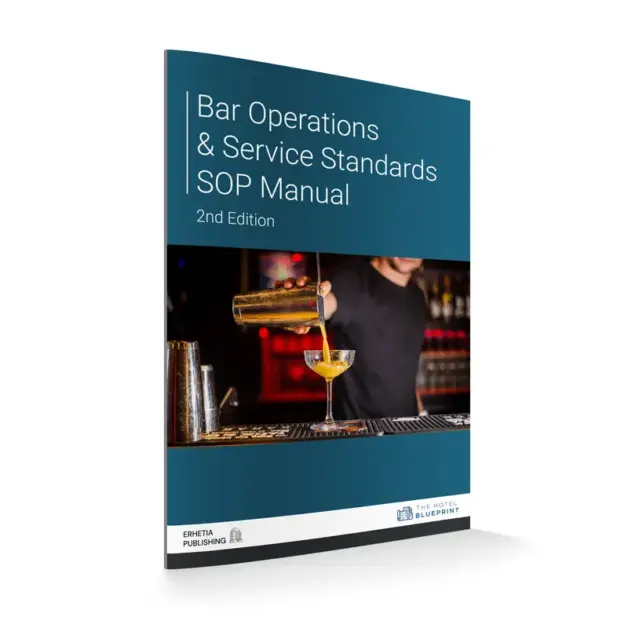



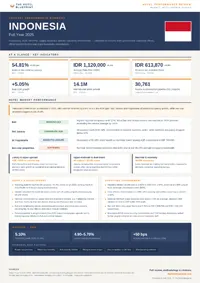
Full year 2025 Indonesia hotel performance review. Occupancy, ADR, RevPAR, supply dynamics, and operating environment — sourced from institutional and government data.
This review draws exclusively on data published by government statistical offices, official tourism bodies, and major hospitality associations. All sources are cited.
Available to registered members – Create an account here
Table of Contents
1. Economic and Tourism Context
The macroeconomic trajectory of Indonesia throughout the twelve months of 2025 remained aligned with mid-term structural ranges, though specific tourism segments experienced variance from early-period institutional targets. According to the national statistics bureau, Badan Pusat Statistik (BPS), in its official statistical release Berita Resmi Statistik: Pertumbuhan Ekonomi Indonesia 2025, the annualized gross domestic product growth rate for the state settled at 5.05 percent. This figure demonstrated marginal deceleration when contrasted against initial projections published by Bank Indonesia (BI) in its early-2025 monetary policy frameworks, which had anticipated an upper bound of 5.30 percent. The primary driver of this stabilization was domestic private consumption, which grew at 4.93 percent, supported by controlled core inflation. Business confidence indicators within the services sector stayed in expansionary territory throughout the period, with the Bank Indonesia Prompt Manufacturing Index and corresponding services indices remaining above the fifty-point threshold, indicating sustained capital utilization.
Domestic tourism volumes maintained strong baseline metrics, driven largely by extended holiday periods and expanded regional low-cost carrier route networks. The BPS statistical release Berita Resmi Statistik: Perkembangan Pariwisata dan Transportasi Nasional Desember 2025 recorded total domestic traveler movements at 945.2 million trips over the full calendar year. This volume represents a 6.2 percent expansion relative to the previous twelve-month period, reflecting steady internal demand for provincial transport and accommodation. The state rail network and inter-island civil aviation sectors reported passenger volume expansions of 8.4 percent and 5.1 percent respectively, confirming that geographic mobility within the archipelago sustained the domestic lodging market.
International inbound arrivals encountered differing dynamics across major provincial entry points, known as gateways. Total international visitor arrivals achieved a compiled figure of 14.1 million entries by December 31, 2025, as documented in the BPS immigration registry datasets. This outcome met the median threshold of the target band established by the Ministry of Tourism and Creative Economy, Kementerian Pariwisata dan Ekonomi Kreatif (Kemenparekraf), which sought between 13.0 million and 14.3 million international visits. According to regional arrival breakdowns within the same BPS dataset, Ngurah Rai International Airport in Bali accounted for 46.3 percent of total foreign arrivals, demonstrating a continuing geographic concentration of international leisure demand. Soekarno-Hatta International Airport in Jakarta accounted for 22.1 percent of the total, driven primarily by regional corporate travel and intra-ASEAN commercial activity. The remaining volume was distributed across secondary ports, including Batam and Medan. International visitor expenditure metrics monitored by the International Monetary Fund (IMF) in its January 2026 World Economic Outlook Update indicated that the average length of stay for inbound travelers extended to 8.2 days, a minor increase from the 7.9 days observed in the preceding annual cycle, which altered total nominal spending patterns within the primary resort nodes.
2. Hotel Market Performance
Indonesian hotel market performance indicators during the twelve months of 2025 demonstrated distinct divergence between primary leisure hubs and urban commercial centers. According to data published by Badan Pusat Statistik (BPS) in its official statistical release Berita Resmi Statistik: Perkembangan Tingkat Penghunian Kamar Hotel Desember 2025, the national average occupancy rate for star-rated hotels reached 54.81 percent. This represents an increase of 1.25 percentage points when compared to the 53.56 percent recorded during the twelve months of 2024. Non-star accommodation providers maintained a lower baseline, concluding the period at an average occupancy rate of 26.43 percent.
Analysis of hotel classes reveals that luxury and upper-upscale properties outperformed midscale and economy tiers in driving premium yield. Secondary industry tracking from the STR/CoStar Asia Pacific Hotel Performance Review: Full Year 2025 confirms that the national Average Daily Rate (ADR) for star-rated properties expanded by 6.4 percent year-on-year to reach an annualized average of 1,120,000 Indonesian Rupiah (IDR). Driven by this pricing traction in the premium segments, national Revenue Per Available Room (RevPAR) improved by 8.9 percent relative to the prior annualized period, settling at IDR 613,870.
Geographic sub-markets exhibited sharp performance variations across the archipelago, with Bali, Jakarta, and Yogyakarta serving as the primary performance archetypes. The BPS provincial database shows that Bali maintained the highest regional occupancy benchmark in the state, averaging 65.12 percent for the full year. This performance was driven by the sustained international inbound demand detailed in Chapter 1. The luxury resort enclaves of Nusa Dua and Uluwatu commanded an ADR premium, exceeding the national average by 140 percent according to STR/CoStar regional indices. Conversely, Jakarta experienced a different demand cycle focused on corporate procurement and state events. The Special Capital Region of Jakarta posted an annual occupancy rate of 61.34 percent, concentrated heavily during midweek business cycles, while its weekend occupancy dropped below 42 percent. Yogyakarta recorded an annual average occupancy rate of 52.18 percent, relying heavily on domestic leisure travel and regional conference business. This domestic dependency left Yogyakarta more exposed to seasonal shifts in internal consumer spending, resulting in a compressed ADR of IDR 740,000 across its classified properties.
Star-Rated Hotel Occupancy Rates By Selected Province, Full Year 2024 vs 2025
| Province | 2024 Average Occupancy (%) | 2025 Average Occupancy (%) | Percentage Point Change |
| Bali | 63.27 | 65.12 | 1.85 |
| DKI Jakarta | 60.11 | 61.34 | 1.23 |
| DI Yogyakarta | 51.45 | 52.18 | 0.73 |
The figures presented in the table above reproduce the verified regional metrics compiled from the BPS provincial statistical databases for the respective calendar years, illustrating the uniform positive trajectory across the primary commercial and leisure sub-markets.
3. Supply and Development
The expansion of Indonesia’s commercial lodging supply during the twelve months of 2025 shifted toward the premium, branded segments, heavily weighted toward established urban clusters and specific luxury primary markets. Administrative delays in localized municipal data collection mean that absolute national census aggregates remain subject to revision. However, secondary industry tracking from the Lodging Econometrics (LE) Asia-Pacific Hotel Construction Pipeline Trend Report Q4 2025 positioned Indonesia fourth within the broader Asia-Pacific region, excluding China, by total asset volume, documenting a standing pipeline of 181 projects representing 30,761 rooms.
Asset delivery within the calendar year concentrated primarily on upper-midscale and upscale asset tiers, often utilizing dual-branded formats within integrated retail structures to optimize land allocation costs. Significant physical asset completions monitored during the second and third quarters of 2025 included midscale expansion across the West Java manufacturing corridors, such as the dual-hotel structure containing the Fairfield by Marriott Bekasi and Four Points by Sheraton Bekasi within the Pakuwon Mall development zone. Urban lifestyle inventory additions were also observed in East Surabaya through the completion of the 233-room Aloft Surabaya Pakuwon City, and within West Jakarta through the 150-room Aloft Jakarta Kebon Jeruk. Premium gateway expansion was characterized by the late-2025 launch of the Crowne Plaza Labuan Bajo in East Nusa Tenggara, reflecting institutional capital deployment into state-designated secondary tourism hubs outside of Bali.
Geographically, the development pipeline exhibits distinct polarization between corporate commercial capacity in the capital and premium boutique resort development in regional leisure nodes. According to the LE municipal pipeline data for the close of the fourth quarter of 2025, Jakarta remained the dominant urban construction cluster in the state, containing 46 active projects encompassing 10,159 rooms. Conversely, new capacity planning within Bali and neighboring islands skewed heavily toward independent boutique footprints and high-end niche conversions, such as the 36-key Hiliwatu Bali Ubud under the Tribute Portfolio tier. Brand conversion activity grew more prominent during the period, driven by owners converting independent properties to international management platforms to secure global distribution systems amid rising operating costs. Publicly traded developers, including PT Jakarta Setiabudi Internasional Tbk, highlighted selective portfolio asset repositioning within their investor reports, favoring structural refurbishments over new greenfield land acquisition due to tightening credit conditions.
Forward supply forecasts for the subsequent twelve to twenty-four months indicate a sustained delivery schedule, particularly within the upscale and luxury brackets. The LE analyst projections for the regional development cycle indicate that a significant portion of Indonesia’s pipeline projects scheduled to start construction within the next twelve months are targeted for completion between mid-2026 and late-2027. This forward inventory is dominated by higher-end chain scales, with luxury and upper-upscale projects accounting for more than forty percent of total planned rooms. This forward pipeline concentration creates a localized risk of capacity inflation within premium sub-markets like southern Bali and central Jakarta, where room counts are projected to expand ahead of baseline corporate demand curves.
4. Operating Environment
The underlying fiscal parameters of the Indonesian hospitality operating environment during the twelve months of 2025 were characterized by rising regulatory labor costs and a late-period acceleration in headline commodity inflation. Operational data compiled by the national statistics bureau, Badan Pusat Statistik (BPS), and published within its official registries, shows that structural price stability remained within the broad target bands managed by the central bank, though specific inputs critical to lodging operations demonstrated localized volatility.
According to the BPS statistical release Indeks Harga Konsumen dan Inflasi Desember 2025, Indonesia’s headline inflation rate concluded the annualized period at 2.92 percent year-on-year. This represented an acceleration from the 1.57 percent recorded at the close of 2024, driven primarily by external shocks in the food, beverage, and tobacco supply chains, which posted an aggregate annualized expansion of 4.58 percent. For hotel food and beverage departments, procurement budgets faced upward pressure due to specific commodity price surges, led by volatile agricultural yields and livestock adjustments. Conversely, core inflation, which filters out volatile food and administered items, grew at a more stable rate of 2.38 percent, reflecting consistent domestic aggregate demand. The housing, water, electricity, and household fuels component rose by 1.62 percent over the same period, indicating a controlled trajectory for commercial utility overheads, as regional base power tariffs for commercial industrial consumers remained stabilized by state energy frameworks.
Labor expenditures experienced upward revisions resulting from structural adjustments to provincial minimum wage frameworks, known as Upah Minimum Provinsi (UMP). Under statutory mandates issued by the Ministry of Manpower, Kementerian Ketenagakerjaan (Kemnaker), the average national baseline minimum wage expansion for 2025 was established near 6.50 percent, reflecting adjusted calculations linking regional economic growth parameters to the local index. In the primary corporate hotel market of the Special Capital Region of Jakarta, the baseline UMP for 2025 was fixed at IDR 5,396,761 per month, creating a mandatory baseline cost floor that impacted entry-level service staff and line-level operational personnel.
Provincial Minimum Wage Baselines In Primary Hotel Sub-Markets, 2024 vs 2025
| Province / Administrative Region | 2024 Minimum Wage Baseline (IDR) | 2025 Minimum Wage Baseline (IDR) | Nominal Annual Change (%) |
| DKI Jakarta | 4,901,798 | 5,396,761 | 10.10 |
| Bali | 2,813,672 | 2,996,560 | 6.50 |
| West Java | 2,057,495 | 2,191,232 | 6.50 |
The data points contained in the table above replicate the statutory determinations published directly by Kemnaker in its regional labor directives, demonstrating the geographical variance in baseline statutory operational compliance costs across the three major lodging zones.
Hospitality workforce availability indicators monitored by BPS via its Keadaan Ketenagakerjaan Indonesia reports showed an increasing formalization of service sector labor. While the overall national underemployment rate trended downward, hospitality operators faced rising indirect costs linked to baseline payroll scaling. These included mandated corporate contributions to the state social security frameworks, Badan Penyelenggara Jaminan Sosial (BPJS), and statutory commitments regarding the mandatory religious holiday allowance, Tunjangan Hari Raya (THR). This combination of base salary expansion and rising indirect payroll compliance requirements altered the cost structure of luxury properties, forcing asset managers to balance headcount targets against rising departmental costs.
5. Outlook and Risk Factors
The forward performance trajectory for the Indonesian hospitality sector during the post-2025 cycle reflects a steady macroeconomic base tempered by tightening financial conditions and localized capacity inflation. Institutional assessments point to sustained domestic demand, while international leisure segments face shifting structural boundaries and escalating regional competition.
Macroeconomic baseline projections published by the International Monetary Fund (IMF) in its April 2026 World Economic Outlook forecast Indonesia’s real gross domestic product growth at 5.10 percent for both the 2026 and 2027 fiscal intervals. This structural stability is expected to shield the domestic accommodation sector from acute demand contractions, maintaining consistent volumes within midscale and economy tiers. Similarly, the Bank Indonesia (BI) monetary policy framework, articulated in the central bank’s May 2026 monetary declarations, projects national economic expansion within a broader band of 4.90 percent to 5.70 percent. This growth is supported by high baseline infrastructure investment and robust consumer spending, which typically accelerates surrounding regional legislative events and extended national religious holidays.
Known demand catalysts for the post-2025 period include targeted state-backed tourism promotions and scheduled international events focused on primary conventions and leisure nodes. The Ministry of Tourism and Creative Economy, Kementerian Pariwisata dan Ekonomi Kreatif (Kemenparekraf), via its strategic sector plans, has expanded promotional capital allocations toward the Five Super Priority Destinations, including Borobudur in Central Java, Mandalika in West Nusa Tenggara, and Labuan Bajo in East Nusa Tenggara. These regional initiatives aim to diversify foreign visitor arrivals away from the over-indexed Bali gateway, shifting commercial room nights toward provincial boutique developments. Concurrently, the expansion of regional MICE facilities in the Greater Jakarta area is expected to stabilize midweek urban corporate occupancy, helping to buffer the sharp weekend drops noted in the previous annual performance tracking.
Principal operational and financial risk factors remain centered on external macroeconomic shocks, currency fluctuations, and localized capacity imbalances. Institutional risk evaluations from Bank Indonesia highlight an increase in the BI-Rate by fifty basis points to 5.25 percent during the second quarter of 2026, aimed at preserving Rupiah exchange rate stabilization amid ongoing geopolitical volatility in the Middle East. For asset owners and developers, this higher interest rate environment elevates borrowing costs, which is expected to delay the delivery schedules of pipeline projects detailed in Chapter 3.
Furthermore, international visitor distributions remain exposed to shifting global flight availability and changing visa structures across competing Southeast Asian markets. The Otoritas Jasa Keuangan (OJK – Financial Services Authority) documented in its July 2026 structural assessments that while the domestic financial sector remains stable, a late-period acceleration in headline inflation and localized manufacturing contractions require close attention. For luxury resort operators, this means margin compression risks persist if statutory minimum wage floors expand faster than achievable ADR growth, particularly within high-supply sub-markets where independent boutique inventory competes directly with international brand platforms.
Data Source
- GR 49/2025 and what it means for employers in Indonesia : https://indonesia.acclime.com/news/gr-49-2025-meaning/
- Badan Pusat Statistik, Berita Resmi Statistik: Pertumbuhan Ekonomi Indonesia 2025 : https://www.bps.go.id
- Badan Pusat Statistik, Berita Resmi Statistik: Perkembangan Pariwisata dan Transportasi Nasional Desember 2025 : https://www.bps.go.id
- Badan Pusat Statistik, Statistik Hotel dan Akomodasi Lainnya di Indonesia 2025 / Perkembangan Tingkat Penghunian Kamar Hotel Desember 2025 : https://www.bps.go.id
- Badan Pusat Statistik, Keadaan Ketenagakerjaan Indonesia Agustus 2025 : https://www.bps.go.id
- Badan Pusat Statistik, Indeks Harga Konsumen dan Inflasi Desember 2025 : https://www.bps.go.id
- Bank Indonesia, Laporan Kebijakan Moneter Triwulan I-2026 : https://www.bi.go.id
- Kementerian Ketenagakerjaan, Keputusan Penetapan Upah Minimum Provinsi 2025 : https://kemnaker.go.id
- Kementerian Pariwisata dan Ekonomi Kreatif, Laporan Kinerja Tahunan 2025 : https://kemenparekraf.go.id
- Kementerian Pariwisata dan Ekonomi Kreatif, Rencana Strategis Pariwisata 2026 : https://kemenparekraf.go.id
- International Monetary Fund, World Economic Outlook Update (January 2026) : https://www.imf.org
- International Monetary Fund, World Economic Outlook (April 2026) : https://www.imf.org
- Otoritas Jasa Keuangan, Laporan Asesmen Sektor Jasa Keuangan 2026 : https://ojk.go.id
- STR/CoStar, Asia Pacific Hotel Performance Review: Full Year 2025 : https://www.str.com
- Lodging Econometrics, Asia-Pacific Hotel Construction Pipeline Trend Report Q4 2025 : https://lodgingeconometrics.com
Available to registered members – Create an account here