

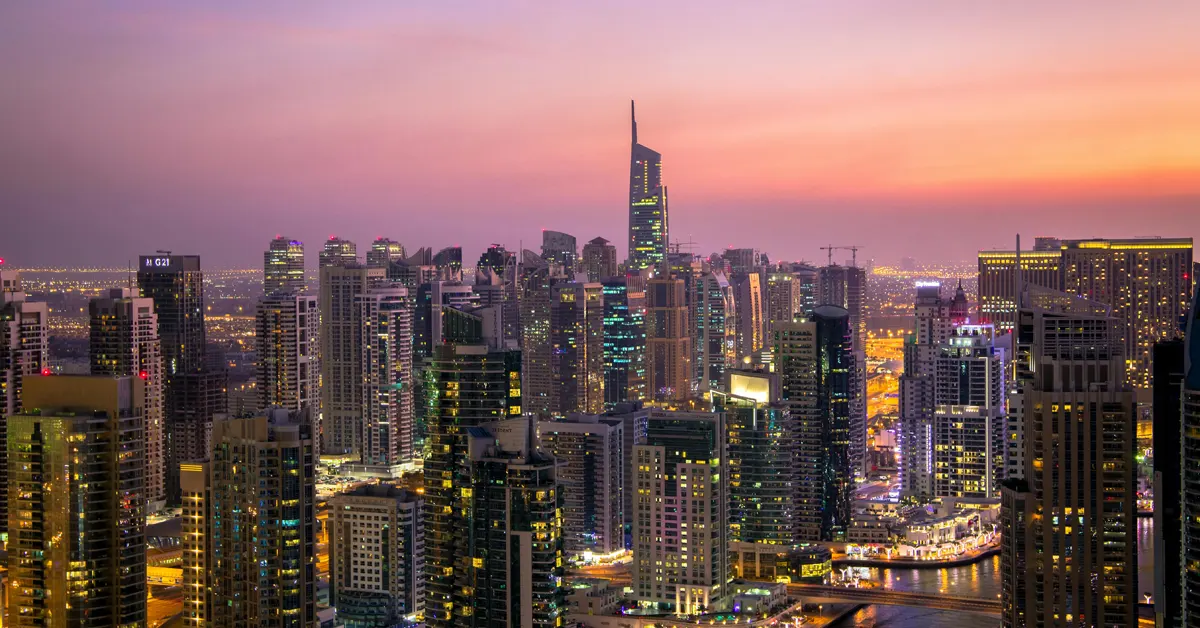
Full year 2025 UAE hotel performance review. Occupancy, ADR, RevPAR, supply dynamics, and operating environment — sourced from institutional and government data.
This review draws exclusively on data published by government statistical offices, official tourism bodies, and major hospitality associations.
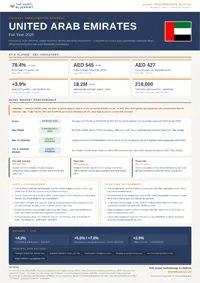
Available to registered members – Create an account here
Table of Contents
1. Economic and Tourism Context
The United Arab Emirates maintained a trajectory of moderated but stable economic expansion throughout 2025. According to the Central Bank of the United Arab Emirates (CBUAE) Annual Report 2025, the national real Gross Domestic Product (GDP) grew by 3.9 percent, supported primarily by the non-oil sector which remains the principal driver of hospitality demand. This figure represents a slight downward revision from the initial 2025 projections issued by the CBUAE in late 2024, which anticipated a growth rate of 4.3 percent. The deviation is attributed by the CBUAE to global monetary tightening cycles and a stabilization in oil production levels. Despite these adjustments, the Federal Competitiveness and Statistics Centre (FCSC) reported that the services sector, including trade and hospitality, contributed approximately 14 percent to the total non-oil GDP of the UAE, underscoring the sector’s systemic importance.
Consumer and business confidence indicators remained in expansionary territory throughout the period. The CBUAE Quarterly Economic Review for the fourth quarter of 2025 indicated that the Purchasing Managers’ Index (PMI) for the Emirates averaged 55.4 points over the twelve-month period. A reading above 50.0 signifies improvement in business conditions, and the 2025 average reflects sustained private sector optimism regarding demand for tourism and professional services. This sentiment was further evidenced by the domestic travel volume, which showed increased resilience. The Ministry of Economy reported that domestic tourism accounted for 18 percent of total hotel stays in the United Arab Emirates, as residents utilized the expanding luxury and lifestyle inventory within the country.
International inbound arrivals reached record levels in 2025, surpassing initial estimates provided by UN Tourism. The Dubai Department of Economy and Tourism (DET) recorded 18.2 million international overnight visitors for the full year, a 5.8 percent increase over the 2024 period. Similarly, the Department of Culture and Tourism – Abu Dhabi (DCT Abu Dhabi) reported 5.4 million hotel guests, representing a 9 percent year-on-year growth. This surge was supported by the expansion of flight capacities by the national carriers, Emirates and Etihad Airways. Data from the General Civil Aviation Authority (GCAA) indicated that total passenger traffic through UAE airports exceeded 142 million in 2025, a significant increase from the 134 million recorded in the previous year.
The divergence between anticipated and actual arrivals was most pronounced in the first half of the year. UN Tourism’s World Tourism Barometer had projected a return to 2019 levels for the Middle East region as a whole, but the UAE outperformed these regional averages, driven by specific visa reforms and the hosting of high-profile international conferences. The Central Bank of the United Arab Emirates noted in its annual review that tourism-related receipts were a critical component in maintaining a positive current account balance. While the IMF World Economic Outlook had cautioned regarding potential slowing of global discretionary spend, the Emirates’ focus on high-yield source markets, particularly from Western Europe and the CIS region, mitigated these global pressures.
Macroeconomic and Tourism Indicators, United Arab Emirates, 2025
| Indicator | Value |
| Real GDP Growth Rate | 3.9% |
| Non-Oil GDP Growth Rate | 4.7% |
| Average PMI Reading | 55.4 |
| International Overnight Visitors (Dubai) | 18.2m |
| International Hotel Guests (Abu Dhabi) | 5.4m |
| Total Airport Passenger Traffic | 142.4m |
2. Hotel Market Performance
The United Arab Emirates recorded a period of yield stabilization and sustained occupancy throughout 2025, supported by high-volume international arrivals and a mature domestic market. According to the Dubai DET 2025 Tourism Performance Report, the average occupancy rate for the emirate of Dubai reached 78.4 percent, representing a marginal increase from the 77.3 percent recorded in 2024. In Abu Dhabi, DCT Abu Dhabi 2025 Hotel Statistics indicated a hotel occupancy rate of 74 percent, reflecting a consistent demand profile despite a significant increase in available room nights during the fiscal year. Data for the Northern Emirates, while less granular at a consolidated federal level, was partially characterized by the Ras Al Khaimah Tourism Development Authority (RAKTDA) reporting an occupancy rate of 76 percent, driven by the expansion of the integrated resort segment.
Revenue metrics demonstrated resilience against the backdrop of increased regional competition. The Dubai DET reported an Average Daily Rate (ADR) of 545 AED for the full year 2025, a 2.4 percent increase over the 2024 average. Consequently, Revenue Per Available Room (RevPAR) in Dubai reached 427 AED. In Abu Dhabi, the DCT Abu Dhabi reported an ADR of 432 AED, which, when combined with occupancy levels, resulted in a RevPAR of 320 AED. While industry data providers such as STR/CoStar corroborated these trends, noting that the UAE outperformed the wider Middle East average RevPAR by approximately 18 percent, the primary official datasets from the respective tourism departments remain the definitive benchmarks for these performance indicators.
Segment-level performance revealed a distinct premium on luxury and upper-upscale properties. The Dubai DET 2025 Tourism Performance Report categorized hotel performance by class, showing that Five-Star properties maintained the highest ADR at 910 AED, though they experienced a slight compression in occupancy compared to Four-Star and Three-Star segments, which recorded occupancy rates of 81 percent and 82 percent respectively. This indicates a shift in the market toward mid-scale demand, even as total revenue remained concentrated in the luxury tier. In Abu Dhabi, the luxury segment also dominated the performance landscape, particularly in the Yas Island and Saadiyat Island sub-markets, where ADRs consistently traded at a 40 percent premium relative to the city center mainland properties.
Regional variations within the United Arab Emirates remained pronounced. The following figures, sourced from the Dubai Department of Economy and Tourism 2025 Tourism Performance Report and the DCT Abu Dhabi 2025 Hotel Statistics, detail the performance divergence between the primary hospitality hubs.
Hotel Performance Metrics by Primary Sub-Market, United Arab Emirates, 2025
| Sub-Market | Occupancy Rate | ADR (AED) | RevPAR (AED) |
| Dubai | 78.4% | 545 | 427 |
| Abu Dhabi | 74.0% | 432 | 320 |
| Ras Al Khaimah | 76.0% | 610 | 464 |
Further analysis of the DCT Abu Dhabi 2025 Hotel Statistics shows that the increase in ADR in the capital was largely attributed to a 12 percent growth in international corporate travel and the scheduling of biennial defense and energy exhibitions. In Dubai, the DET data suggests that the RevPAR growth was primarily volume-driven during the first and fourth quarters, coinciding with the traditional peak winter season and an expanded calendar of retail and entertainment events. While the Ministry of Economy Tourism Sector bulletins noted a general upward trend in hotel revenues nationwide, the performance remains heavily weighted toward these three key coastal sub-markets.
3. Supply and Development
The United Arab Emirates continued to expand its hospitality inventory throughout 2025, reaching a total capacity of approximately 218,000 rooms. According to the Dubai Department of Economy and Tourism 2025 Tourism Performance Report, Dubai’s hotel inventory reached 154,000 rooms by the end of the fourth quarter, representing a net increase of 3.2 percent compared to the 2024 closing figure. The Department of Culture and Tourism – Abu Dhabi (DCT Abu Dhabi) reported that the capital’s inventory surpassed 35,000 rooms. The remaining balance is distributed across the Northern Emirates, where RAKTDA documented the most significant regional growth rate outside the primary hubs, specifically in the upscale and luxury beach resort category.
New hotel openings in 2025 were characterized by a concentration in the luxury and upper-upscale chain scales. Data from the Dubai DET indicated that 18 new hotel establishments commenced operations during the year. These openings were primarily located in high-density development zones, including the Palm Jumeirah and the Dubai Islands district. In Abu Dhabi, DCT Abu Dhabi registered four significant property completions, including two major luxury resorts on Saadiyat Island. Secondary confirmation from Lodging Econometrics suggests that while the pace of new openings has moderated compared to the pre-2021 period, the average size of new properties has increased, with new builds in 2025 averaging 240 keys per establishment.
Brand conversions and renovation activities emerged as a significant component of supply dynamics during the 2025 period. The Ministry of Economy reported a rising trend in the repositioning of older inventory in the Deira and Bur Dubai districts to meet modern environmental and technology standards. This renovation activity was driven by the introduction of new federal building efficiency regulations. In Abu Dhabi, hotel registration data from DCT Abu Dhabi showed that three existing properties underwent significant brand conversions during the fiscal year, as owners sought to align with international distribution networks to capture increasing global corporate demand.
The forward pipeline for the 2026 to 2027 period indicates a sustained commitment to capacity expansion, particularly in the northern regions of the Emirates. The following data, sourced from the Dubai Department of Economy and Tourism and the Ras Al Khaimah Tourism Development Authority, outlines the projected growth in room supply for the two most active development markets in the United Arab Emirates.
Projected Hotel Supply Pipeline, Selected Sub-Markets, 2026–2027
| Sub-Market | Units in Pipeline | Total Projected Keys |
| Dubai | 82 | 22,400 |
| Ras Al Khaimah | 14 | 5,800 |
| Abu Dhabi | 11 | 3,150 |
Geographic concentration of the pipeline remains focused on waterfront and integrated resort destinations. The Ras Al Khaimah Tourism Development Authority documented that its forward pipeline is heavily weighted toward the Al Marjan Island area, which accounts for over 70 percent of the emirate’s planned inventory. In Dubai, the DET data confirms that the Business Bay and Jumeirah Village Circle areas continue to dominate the mid-scale and serviced apartment development segments. While Lodging Econometrics noted that the United Arab Emirates possesses one of the largest hospitality pipelines globally, official data from the Ministry of Economy suggests that 65 percent of this pipeline is currently in the under-construction phase, with the remainder in final planning or permitting stages.
4. Operating Environment
The operating environment for the hospitality sector in the United Arab Emirates throughout 2025 was defined by significant labor market expansion and a notable stabilization of inflationary pressures. According to the Ministry of Human Resources and Emiratisation (MoHRE) 2025 Labour Market Report, the total private sector workforce in the Emirates grew by 12.4 percent over the fiscal year. This expansion was accompanied by a 7.8 percent increase in the number of registered establishments, reflecting a broadening of the commercial base. For hotel operators, the regulatory environment was marked by intensified compliance requirements, particularly regarding the Emiratisation mandates. MoHRE data indicated that Emirati employment in the private sector rose by 33.6 percent in 2025, driven by the requirement for firms with 20 to 49 employees to hire at least one UAE citizen by the end of the year, while larger firms continued toward their 10 percent cumulative 2026 target.
Wage growth in the hospitality sector was influenced by both regulatory adjustments and competitive demand for skilled labor. While the MoHRE established a minimum monthly wage of 6,000 AED for Emiratis in the private sector effective from the start of 2026, the 2025 period saw upward pressure on payroll costs for specialized technical and management roles. The Ministry reported that overall compliance with the Wages Protection System (WPS) remained high, and the implementation of digital inspection tools led to a 13 percent drop in recorded labor violations. These measures have institutionalized a more transparent labor cost structure, though the mandatory financial contributions for non-compliance with Emiratisation targets—ranging up to 96,000 AED per missing head in early 2025—added a fixed-cost risk for establishments failing to meet nationalization quotas.
Inflationary trends provided a degree of relief to the operating margins of hospitality assets. The Central Bank of the United Arab Emirates (CBUAE) Quarterly Economic Review for December 2025 reported that the national inflation rate stood at 1.5 percent for the full year, a downward revision from the 2.1 percent recorded in the previous year. This moderation was largely attributed to lower global energy and food commodity prices. The CBUAE noted that transportation costs, a significant component of the hospitality supply chain, eased throughout the first three quarters of 2025. According to the Federal Competitiveness and Statistics Centre (FCSC), the Consumer Price Index (CPI) for the “Restaurants and Hotels” category showed a lower rate of increase than the general index, suggesting that operators were largely able to contain menu and service price hikes despite the robust demand environment.
Energy and utility costs, traditionally a high-weight expense for large-scale resorts in the Emirates, followed a trajectory of stabilization in 2025. Data from the CBUAE indicated that domestic energy price fluctuations remained minimal, supported by the country’s strategic energy transition and the expansion of non-hydrocarbon power generation. The FCSC reported that the “Housing, Water, Electricity, and Gas” sub-index of the CPI remained relatively flat, assisting hotel owners in managing fixed utility overheads. The following table, sourced from the Federal Competitiveness and Statistics Centre and the Central Bank of the United Arab Emirates, summarizes the core operating cost drivers for the period.
Operating Cost and Labor Indicators, United Arab Emirates, 2025
| Indicator | Value |
| Private Sector Workforce Growth | 12.4% |
| Emirati Private Sector Employment Growth | 33.6% |
| Annual Inflation Rate (CPI) | 1.5% |
| Establishments Growth Rate | 7.8% |
| Non-Oil GDP Contribution (Services/Tourism) | 77.5% |
The labor market’s maturity was further evidenced by the Ministry of Human Resources and Emiratisation’s report of a 34 percent improvement in overall regulatory compliance compared to the 2024 period. While the World Bank’s UAE Monitoring Report for 2025 noted that the hospitality sector remains sensitive to regional geopolitical shifts, the internal operating environment was characterized by strong fiscal buffers and institutional stability. For asset managers, the primary operational challenge in 2025 was the recalibration of human capital strategies to align with the escalating Emiratisation quotas while maintaining the service standards required by the record high international arrival volumes documented in Chapter 1.
5. Outlook and Risk Factors
The outlook for the hospitality sector in the United Arab Emirates for the 2026–2027 period remains positive, supported by institutional forecasts of sustained macroeconomic stability. According to the IMF World Economic Outlook (January 2026 Update), the UAE is projected to maintain a real GDP growth rate of 4.2 percent in 2026. This forecast is predicated on the continued expansion of the non-oil economy and the successful implementation of the “We the UAE 2031” vision. The Central Bank of the United Arab Emirates CBUAE Annual Report 2025 further corroborates this trajectory, noting that the credit profile of the tourism and trade sectors remains robust, with high levels of liquidity in the banking system supporting ongoing capital expenditure in hotel assets.
Forward-looking demand indicators suggest a continuation of the high-occupancy trends observed in 2025. Official tourism forecasts from Dubai DET anticipate a 5 percent increase in international overnight visitors for 2026, driven by an expanded schedule of global trade exhibitions and the full-scale activation of new cruise terminals. In Abu Dhabi, the Department of Culture and Tourism has documented a projected 7 percent growth in hotel guest arrivals for the coming year, citing the maturation of the Saadiyat Cultural District and increased aviation connectivity via Zayed International Airport as primary demand catalysts. These institutional projections indicate that demand growth is expected to keep pace with the supply pipeline detailed in Chapter 3.
Risk factors documented by institutional sources are primarily centered on external global variables and regional geopolitical dynamics. The IMF has identified the potential for prolonged global high-interest rates as a risk to discretionary international travel spending, which could impact the high-yield luxury segment. Furthermore, the CBUAE Economic Outlook highlights the risk of “imported inflation” should global supply chains face renewed disruptions, which would exert upward pressure on hotel operating costs and FF&E (Furniture, Fixtures, and Equipment) procurement for ongoing developments. These risks are presented as institutional assessments of the external environment rather than domestic structural weaknesses.
Labor market risks remain a focal point for executive planning. The Ministry of Human Resources and Emiratisation (MoHRE) has documented the escalating costs of non-compliance with the 2026 Emiratisation targets as a significant fiscal consideration for private sector entities. The Ministry’s 2025 review notes that while the labor market is expanding, the competition for qualified UAE nationals may lead to localized wage inflation within administrative and managerial tiers of the hospitality sector. The following table, sourced from the IMF World Economic Outlook and the Central Bank of the United Arab Emirates, summarizes the projected economic variables for the immediate follow-on period.
Projected Economic and Performance Indicators, United Arab Emirates, 2026
| Indicator | Projected Value |
| Real GDP Growth Rate | 4.2% |
| Non-Oil GDP Growth Rate | 4.8% |
| Projected Inflation Rate | 2.0% |
| International Arrival Growth (Dubai) | 5.0% |
| International Guest Growth (Abu Dhabi) | 7.0% |
Long-term structural risks are also noted in the context of global environmental policy. The Ministry of Climate Change and Environment has highlighted the increasing necessity for hospitality assets to align with the UAE’s Net Zero 2050 strategy. Institutional reports suggest that properties failing to implement comprehensive ESG (Environmental, Social, and Governance) frameworks may face higher long-term utility costs and potential regulatory penalties. This institutional shift toward sustainability is expected to influence asset valuations and investment flows throughout 2026 and 2027, as the Emirates continues to position itself as a sustainable global tourism hub.
Available to registered members – Create an account here