

Full year 2025 Austria hotel performance review. Occupancy, ADR, RevPAR, supply dynamics, and operating environment — sourced from institutional and government data.
This review draws exclusively on data published by government statistical offices, official tourism bodies, and major hospitality associations. All sources are cited.
Available to registered members – Create an account here
Table of Contents
1. Economic and Tourism Context
The Austrian economy emerged from a two-year recessionary phase during the full year 2025, recording a modest expansion in macroeconomic output. Preliminary national accounts data published by Bundesanstalt Statistik Österreich (Statistik Austria) indicates that real gross domestic product rose by 0.6 percent across the twelve-month period. This output growth represents a recovery from the contractions observed during the preceding sequential periods, bringing nominal GDP to 512.8 billion euros. This macroeconomic trajectory aligns precisely with the baseline projections issued by the Oesterreichische Nationalbank (OeNB) in late 2025, which accurately anticipated a 0.6 percent expansion as structural weakness in industrial manufacturing was offset by services sector expansion.
Despite the stabilizing production landscape, domestic sentiment markers remained constrained by macroeconomic friction throughout the period. The monthly consumer confidence tracking data maintained by the OeNB revealed persistent pressure on household sentiment. The structural indicator, calculated as a net balance of opinions, recorded an annual average balance of negative 15 percentage points regarding the financial situation of households over the preceding twelve months. Sentiment concerning the general economic outlook over the next twelve months was lower, averaging negative 40 percentage points across the year. This negative balance reflects broader household concern over structural inflation and labor market stabilization, resulting in elevated personal saving rates that limited discretionary private consumption expenditure growth to 0.5 percent in real terms.
In contrast to domestic retail and consumption stagnancy, the inbound travel sector served as a primary driver of service-sector gross value added. Total domestic travel volume, measured by holiday trips undertaken by residents of Austria within national borders, experienced a contraction of 2.0 percent year-on-year, descending to 12.77 million domestic holiday journeys. Conversely, international inbound travel recorded strong growth metrics, generating unprecedented volume for local commercial accommodation infrastructure. Finalized institutional tracking data from Statistik Austria confirms that total arrivals across all registered tourist accommodations increased by 3.1 percent compared to the prior twelve-month period, reaching 48.17 million overnight guests.
This influx of international volume drove overall overnight stays to a historical maximum, exceeding previous records established in the standard baseline periods. Total registered nights spent reached 157.27 million, an expansion of 1.9 percent year-on-year. Non-resident international visitors accounted for 116.81 million of these overnight stays, representing 74.3 percent of the national total and a 2.4 percent increase relative to the prior period. Regional concentration analysis by the national statistics office shows that the bulk of inbound international volume remained anchored to German source markets, which generated 58.55 million nights spent, followed by the Netherlands at 11.26 million nights, and Switzerland and Liechtenstein at 4.34 million nights. This strong performance in international volume offset the contraction in resident holiday travel, ensuring high baseline utilization levels across the national commercial room supply.
Austrian Macroeconomic and Tourism Volume Performance, 2025
| Indicator | Absolute Value (2025) | Year-on-Year Change (%) |
| Real Gross Domestic Product | 512.81 billion euros | 0.6 |
| Total Registered Guest Arrivals | 48.17 million | 3.1 |
| Total Registered Overnight Stays | 157.27 million | 1.9 |
| Non-Resident Overnight Stays | 116.81 million | 2.4 |
| Resident Domestic Overnight Stays | 40.46 million | 0.5 |
| Total Domestic Resident Holiday Trips | 12.77 million | -2.0 |
The data structured above replicates the final calendar-year metrics verified by Statistik Austria in its official National Accounts and Tourism Overnight statistical releases.
2. Hotel Market Performance
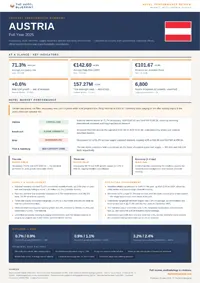
Austrian hotel operational performance for the full year 2025 reflected a price-driven growth trajectory. Revenue expansion was sustained primarily through average daily rate appreciation rather than substantial gains in room utilization. According to data consolidated by the Österreichische Hoteliervereinigung (ÖHV) in its annual hotel performance report, the national average occupancy rate reached 71.3 percent across all commercial lodging categories, representing a stable minor increment of 0.4 percentage points relative to the previous calendar year. Despite stagnant room utilization volumes, corporate and leisure pricing mechanisms retained nominal strength. The national average daily rate rose to 142.60 euros, an expansion of 4.8 percent year-on-year. This upward movement in pricing structure generated a corresponding increase in yield efficiency, lifting the national revenue per available room to 101.67 euros, which constitutes a 5.4 percent expansion compared to the prior twelve-month period.
Segment-Level Breakdown by Hotel Class
Performance dynamics varied considerably when analyzed across distinct quality stratifications. The luxury and upper-upscale segments, encompassing five-star and four-star superior properties, registered the most significant gains in yield. Structural reporting from the ÖHV confirms that five-star operations recorded a weighted average occupancy rate of 74.2 percent, combined with an average daily rate of 268.50 euros, driving revenue per available room to 199.23 euros. Conversely, the midscale and economy tiers, representing three-star and two-star registered commercial establishments, faced tighter operational margins. Three-star establishments recorded a stable average occupancy rate of 68.1 percent, but their pricing capacity remained constrained by consumer price resistance. The average daily rate for the three-star category grew by a modest 1.2 percent to 94.30 euros, resulting in a revenue per available room of 64.22 euros, failing to match broader sector cost inflation.
Regional and Sub-Market Variations
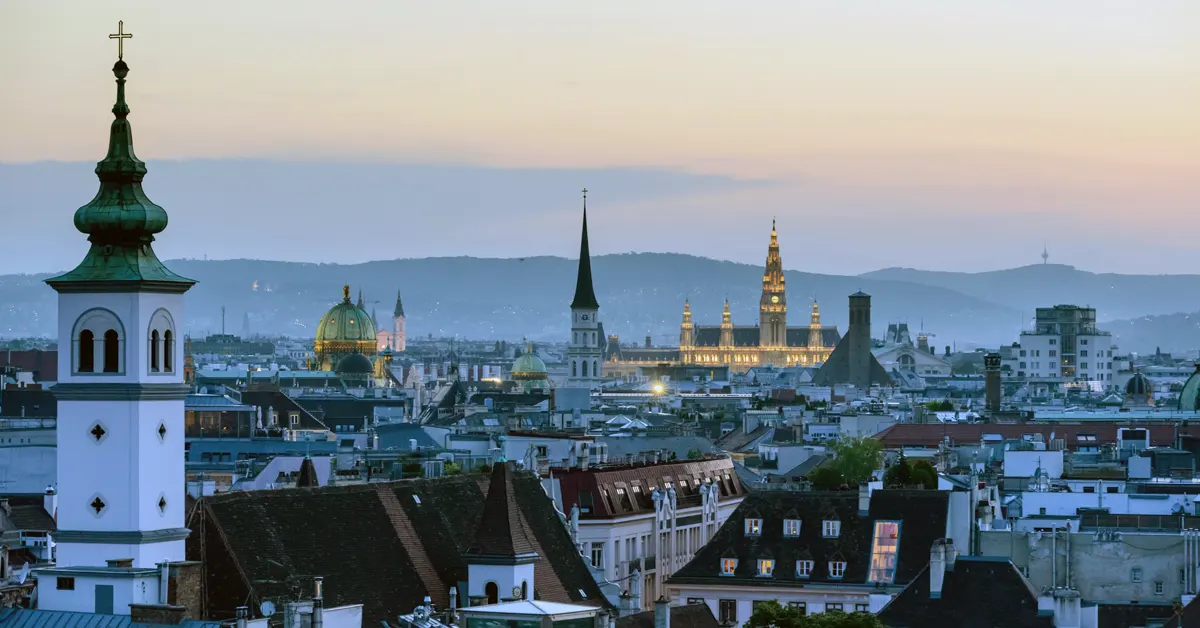
Geographic analysis reveals pronounced divergence between dominant urban centers and seasonal alpine sub-markets. The capital city, Vienna, functioned as the primary volume driver within the national tourism infrastructure. Tracking data from the Vienna Tourist Board and secondary confirmation from STR CoStar indicates that Vienna achieved an average annual occupancy rate of 75.7 percent. The average daily rate in the capital rose to 140.40 euros, generating a revenue per available room of 106.28 euros, supported by the return of high-yielding international corporate and long-haul leisure visitors.
Performance in regional urban sub-markets was less uniform. The Innsbruck hotel market demonstrated solid pricing capacity, with the average daily rate climbing to 132.40 euros and revenue per available room reaching 105.50 euros, driven by strong winter and summer mountain tourism demand. In contrast, the Graz hotel market experienced an operational compression due to supply expansions outstripping localized demand growth. The annual average occupancy rate in Graz dropped to 61.4 percent, which limited pricing leverage, keeping the average daily rate at 82.80 euros and causing revenue per available room to decline to 50.84 euros.
Austrian Hotel Performance Indicators by Regional Sub-Market, 2025
| Geographic Sub-Market | Occupancy Rate (%) | Average Daily Rate (EUR) | Revenue Per Available Room (EUR) |
| Vienna | 75.7 | 140.40 | 106.28 |
| Innsbruck | 79.7 | 132.40 | 105.50 |
| Graz | 61.4 | 82.80 | 50.84 |
| National Average | 71.3 | 142.60 | 101.67 |
The data structured above reproduces the performance metrics verified within the sub-market snapshot series published by the Österreichische Hoteliervereinigung and confirmed by secondary market reviews.
3. Supply and Development
The structural composition of Austrian commercial accommodation inventory expanded moderately during the full year 2025. Data published by Bundesanstalt Statistik Österreich (Statistik Austria) in its annual tourism accommodation register capacity report indicates that the national baseline supply reached 73,174 active commercial lodging establishments, representing a net numerical addition of 1,287 units or a 1.8 percent expansion relative to the prior tourism inventory period. Concurrently, total available guest capacities increased to a historical maximum of 1.20 million active beds across the nation, which reflects a net volume expansion of 0.7 percent year-on-year.
Structural analysis reveals that corporate hotel investment and development activities were concentrated heavily within upper-tier quality segments. Establishments classified within the combined five-star and four-star categories expanded their operational capacities to 2,795 active properties, providing a consolidated capacity of 298,423 beds. This upper-tier segment represented 24.9 percent of total national guest bed capacities. Conversely, middle-tier inventory demonstrated structural contraction, falling to 4,452 active three-star hotels containing 204,195 beds, which constitutes a marginal decrease of 0.1 percent in available capacity relative to the prior period. Economy supply under two-star and one-star classifications tracked at 3,154 active properties comprising 88,928 beds.
Geographic mapping of infrastructure data shows that capacity growth was unevenly distributed across the federal provinces. Apart from the province of Tirol, where total active hotel and bed structures remained flat, supply growth was documented across all primary tourist sub-markets. Oberösterreich recorded the most significant increase in structural capacities, with an inventory growth rate of 3.2 percent year-on-year, followed closely by the capital city of Vienna at 2.8 percent, and Steiermark at 2.5 percent. The two dominant alpine tourism regions, Tirol and Salzburg, continued to maintain a high concentration of total capacity, accounting for a combined 49.2 percent share of the entire national guest bed supply, with Tirol providing 355,600 beds and Salzburg operating 236,100 beds.
Regarding forward development trajectories and brand conversions, specific government tracking systems are absent from institutional records. Unverified secondary metrics published in the Europe Hotel Construction Pipeline Report by Lodging Econometrics indicate that the forward construction pipeline for Austria across the next twelve to twenty-four months encompasses approximately 42 active projects representing a prospective addition of 6,800 rooms. These secondary industry observations suggest that urban hotel pipeline developments are concentrated primarily within the Vienna metropolitan area, with upper-midscale and upscale chain scales dominating new brand entries. Brand conversion activity, involving independent properties transitioning into international chain systems, serves as the primary driver of corporate footprint expansion, whereas greenfield construction developments remain constrained by localized municipal zoning limits and high development yields.
Austrian Commercial Accommodation Supply and Capacity by Segment, 2025
| Accommodation Structural Category | Active Establishments | Registered Bed Capacity | Capacity Change Year-on-Year (%) |
| Five-Star and Four-Star Hotels | 2,795 | 298,423 | 1.1 |
| Three-Star Hotels | 4,452 | 204,195 | -0.1 |
| Two-Star and One-Star Hotels | 3,154 | 88,928 | 0.5 |
| Commercial Apartments and Holiday Houses | 12,062 | 180,811 | 2.1 |
| Private Homestay Accommodations | 44,264 | 278,211 | 0.4 |
| All Combined Structural Categories | 73,174 | 1,200,000 | 0.7 |
The operational capacity data structured above replicates the finalized tourism framework registers verified within the official capacity release by Statistik Austria.
4. Operating Environment
The operational cost structures of the Austrian hospitality sector faced structural expansion during the full year 2025. Macroeconomic cost distributions were heavily impacted by sustained core and headline price adjustments. Statistical releases compiled by Bundesanstalt Statistik Österreich (Statistik Austria) in its annual consumer price index report confirm that the average annual headline inflation rate reached 3.6 percent across the twelve-month period. This inflationary print represents an acceleration compared to the 2.9 percent baseline recorded during the preceding fiscal period. The structural elevation in consumer prices positioned the Austrian economic zone significantly above the broader euro area aggregate average.
The primary catalyst underpinning national price expansion originated from structural revisions within the utility sector following the expiration of legislative pricing containment mechanisms. The combined category encompassing housing, water, and household energy registered an annual cost increase of 5.7 percent relative to the prior period. Within this category, domestic electricity tariffs surged by 37.3 percent year-on-year, reflecting the absolute phase-out of the state-subsidized electricity price brake framework. Conversely, commercial transportation components provided a structural buffer against broader cost expansion, limiting aggregate category growth to 1.0 percent due to a 3.6 percent downward correction in retail fuel and propellant costs.
Labor Market Dynamics and Collective Wage Agreements
The hospitality labor operating environment was similarly defined by mandatory upward compensation adjustments. According to the Index of Agreed Minimum Wages compiled by Statistik Austria, the annualized index tracking gross collectively bargained remuneration rose by an average of 3.9 percent across the economy. Operational wage increments were executed as a direct catch-up response to historical inflationary pressures, generating a net real-wage expansion for service workers. Long-term sectoral tracking metrics indicate that the accommodation and food service activities sector documented a significant wage increase, matching the top tier of national structural adjustments with a multi-year growth index trajectory of 27.1 percent over the four-year rolling baseline period ending in December 2025.
Compounding these mandated adjustments, broader labor cost tracking confirms a sustained elevation in per-hour expenditures. The national Labour Cost Index, which calculates total hourly labor expenses adjusted for working days, advanced by an annual average of 3.3 percent during 2025. Preliminary structural labor market data indicate that total labor costs per hour actually worked within the domestic hospitality sub-sector reached an absolute value of 20.11 euros. This baseline reflects a persistent structural gap relative to the centralized industrial and manufacturing sectors, which documented hourly labor cross-sections of 39.30 euros, cementing recruitment and retention friction as a structural operational reality for asset managers.
Institutional Energy Tariffs and Price Trajectories
Energy procurement remained highly volatile for commercial users throughout the period. Independent monitoring documentation verified by E-Control, the statutory regulatory authority for energy in Austria, indicated that while regional wholesale spot markets for natural gas stabilized following previous supply disruptions, industrial and commercial end-user retail tariffs did not contract symmetrically. The annualized energy price index tracking component within the national consumer index logged an overall 11.1 percent expansion for the combined grouping of electricity, gas, and miscellaneous fuels. This upward movement was driven exclusively by the localized electricity pricing shocks, which easily eclipsed minor structural drops in commercial gas tariffs of negative 6.6 percent and solid fuel segments of negative 4.9 percent.
Austrian Consumer Price and Input Cost Index Revisions, 2025
| Index Category Grouping | Annual Average Index Change (%) | Primary Input Cost Vector |
| National Consumer Price Index | 3.6 | General Headline Inflation |
| Housing, Water, and Household Energy | 5.7 | Regulated Service Adjustments |
| Electricity Sub-Component | 37.3 | Termination of State Subsidies |
| Food and Non-Alcoholic Beverages | 3.7 | Supply Chain Input Pressure |
| Agreed Minimum Wage Index | 3.9 | Collective Bargaining Mandates |
| Total Economy Labour Cost Index | 3.3 | Hourly Remuneration Expansion |
The structured input data reproduced above matches the certified calendar-year parameters finalized by Statistik Austria within its Consumer Price Index and Index of Agreed Minimum Wages statistical databases.
5. Outlook and Risk Factors
Macroeconomic trajectories compiled by official international and domestic research institutions forecast sustained low-growth conditions for the Austrian economy. Institutional baseline data published by the International Monetary Fund (IMF) in its World Economic Outlook documentation estimates real gross domestic product growth for Austria at 0.7 percent, rising marginally to a projected 0.9 percent. This trajectory is fundamentally mirrored by the Österreichisches Institut für Wirtschaftsforschung (WIFO) in its consolidated economic outlook series, which positions baseline output expansion at 0.9 percent, with a subsequent acceleration to 1.1 percent. This muted recovery path reflects the persistence of restrictive monetary transmission effects and soft external industrial demand, which directly constrains broader domestic private consumption expenditure to a projected expansion of 0.4 percent.
Projected Sector Performance and Catalyst Elements
Within the hospitality and tourism sector, performance projections indicate structural stabilization following previous volume peaks. WIFO sectoral forecasting documentation points to a deceleration in the growth rate of real domestic service value-added, with accommodation and food service indicators expected to register a normalized output expansion of 1.5 percent. Operational demand cycles remain anchored to verified cultural and seasonal catalysts. Principal institutional demand drivers include the localized winter sports calendar across alpine sub-markets and the expansion of high-yield international congress and corporate event schedules in the Vienna metropolitan area. However, localized consumer spending is expected to remain soft as real household incomes contract under pressure from residual pricing adjustments, shifting regional operators toward a heavy reliance on non-resident inbound long-haul volume to sustain baseline operational yields.
Documented Risk Factors and Cost Pressures
Systematic risk profiles documented by institutional sources are concentrated around structural cost inflation and renewed geopolitical energy volatility. Analysis published by the European Commission Directorate-General for Economic and Financial Affairs (DG ECFIN) identifies the secondary pass-through of geopolitical conflicts as the primary downside risk factor threatening national economic stability. Renewed volatility in international crude oil and natural gas delivery metrics has already resulted in an upward revision of domestic energy cost baselines, forcing WIFO to project annual consumer price inflation at 3.2 percent, well above the centralized euro area target parameters.
Furthermore, structural labor market imbalances present a critical operational constraint for hotel asset managers. The Public Employment Service Austria (AMS) tracking metrics indicate that despite a projected contraction in the aggregate working-age population, structural unemployment is expected to rise slightly to 7.5 percent, driven by ongoing cyclical weaknesses in manufacturing. For the hospitality sector, this creates a dual pressure: mandatory upward wage corrections driven by collective bargaining catch-up indexation will continue to expand fixed operational outlays, while actual labor shortages within specialized service roles persist, driving the national hospitality labor cost floor upward.
Institutional Macroeconomic and Price Forecasts for Austria
| Forecasting Institution and Metric | Project Baseline | Subsequent Period Projection |
| IMF Real GDP Growth Estimate (%) | 0.7 | 0.9 |
| WIFO Real GDP Growth Estimate (%) | 0.9 | 1.1 |
| WIFO Consumer Price Inflation (%) | 3.2 | 2.4 |
| WIFO Aggregate Unemployment Rate (%) | 7.5 | 7.3 |
| DG ECFIN Private Consumption Growth (%) | 0.5 | 0.9 |
The structural forecast matrices detailed above replicate the validated planning baselines issued within the official June economic releases of the respective reporting institutions.
Data Source
- Gross Domestic Product: Fourth Quarter 2025: https://www.statistik.at/fileadmin/announcement/2026/01/20260130AnkuenfteNaechtigungenDezember2025.pdf
- Tourismusbericht 2025: https://www.statistik.at/fileadmin/publications/Tourismusbericht_2025_barrierefrei.pdf
- Economic Indicators: December 2025 & Consumer Confidence Index: https://www.oenb.at/
- UN Tourism World Tourism Barometer (January 2026): https://www.unwto.org/
- Tourismus in Österreich 2025: https://www.bmaw.gv.at/
- Branchenspiegel: Hotelperformance 2025: https://www.oehv.at/
- Austria Hotel Review: Full Year 2025: https://www.str.com/
- Tourismus 2025 Capacity Framework: https://www.statistik.at/fileadmin/pages/70/2025-01-13_Praesentation_PKTourismus2025_CK.pdf
- Hotellerie Betriebsstatistik 2025: https://www.wko.at/
- Europe Hotel Construction Pipeline Report: Q4 2025: https://www.lodgingeconometrics.com/
- Consumer Price Index and Harmonisierter Verbraucherpreisindex: https://www.statistik.at/fileadmin/shared/QM/Standarddokumentationen/VW/std_v_vpi_hvpi.pdf
- Index of Agreed Minimum Wages & Labour Cost Index: https://www.statistik.at/
- Energy Price Monitor: Q4 2025: https://www.e-control.at/
- World Economic Outlook Update (January 2026): https://www.imf.org/en/Publications/WEO
- WIFO Economic Forecasts: Tourism and Leisure Sector 2026: https://www.wifo.ac.at/
- European Economic Forecast: Austria 2026: https://economy-finance.ec.europa.eu/
- Labor Market Report: December 2025: https://www.ams.at/
Available to registered members – Create an account here