


Table of Contents
1. What is a Hotel SOP? (Definition + Full Form)
SOP stands for Standard Operating Procedure. In hotels, Standard Operating Procedures (SOPs) are documented, step-by-step instructions that define how operational tasks should be performed consistently across departments. They establish standardized methods for routine and critical activities, ensuring service consistency, regulatory compliance, operational efficiency, and quality control throughout the property.
Hotel SOPs are used across all operational and administrative departments, including Front Office, Housekeeping, Food & Beverage, Kitchen, Engineering & Maintenance, Security, Finance, Human Resources, and Sales & Marketing. They provide employees with clear responsibilities, standardized workflows, and measurable performance expectations, reducing operational variation between shifts, teams, and properties.
Unlike informal instructions or on-the-job habits, SOPs create a repeatable operational framework that supports staff training, protects institutional knowledge, minimizes errors, and enables hotels to maintain consistent service standards regardless of employee turnover or business volume.
2. Why Hotel SOPs Matter
Hotels operate through hundreds of interconnected tasks performed by multiple departments, employees, and shifts every day. Without standardized procedures, operational knowledge often depends on individual experience, leading to inconsistent service delivery, communication gaps, operational errors, and unnecessary costs.
Hotel Standard Operating Procedures (SOPs) establish a common operational framework that ensures every recurring task is performed using the same approved method, regardless of who performs it. By clearly defining responsibilities, workflows, quality standards, and control points, SOPs reduce variability in daily operations and create predictable, repeatable outcomes across the property.
Beyond day-to-day execution, SOPs also serve as a central reference for staff training, quality assurance, regulatory compliance, and operational governance. They help hotels preserve institutional knowledge, accelerate onboarding, support continuous improvement, and maintain consistent service standards as teams, technologies, and business requirements evolve.
For these reasons, professionally managed hotels consider SOPs not simply as operational documents, but as a fundamental component of effective hotel management and long-term organizational performance.
3. What a Hotel SOP Contains
While the format of Hotel Standard Operating Procedures varies between organizations, most professionally developed SOPs follow a consistent structure to ensure they are clear, practical, and easy to apply in day-to-day operations.
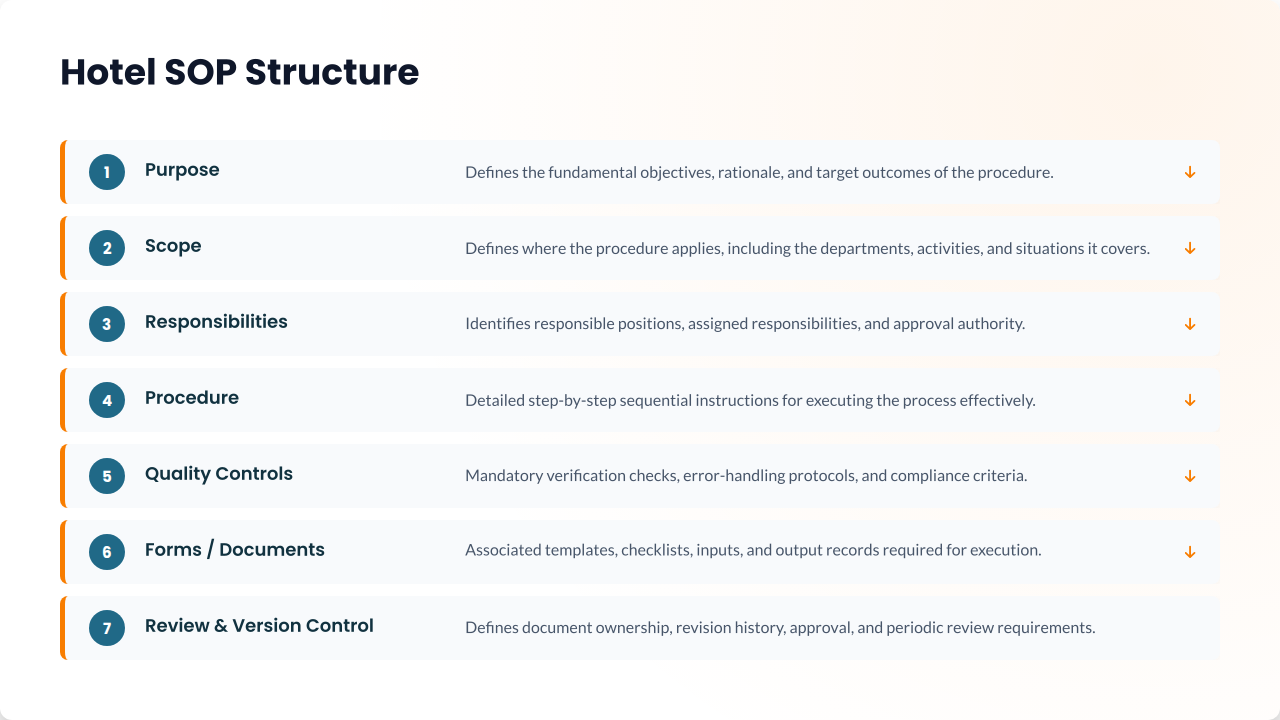
A typical Hotel SOP generally includes:
- Title and Purpose – Clearly identifies the procedure and explains its operational objective.
- Scope – Defines where the procedure applies, including the department, activity, or process it covers.
- Roles and Responsibilities – Identifies the employees or positions responsible for carrying out the procedure and any supervisory oversight required.
- Step-by-Step Procedure – Provides detailed, sequential instructions describing exactly how the task should be performed.
- Quality and Control Requirements – Specifies operational standards, quality checks, safety requirements, or compliance controls that must be followed during execution.
- Required Forms, Documents or Systems – Lists any checklists, templates, records, or software used as part of the procedure.
- Review and Version Control – Records document revisions to ensure employees always follow the latest approved procedure.
Although every hotel adapts its SOPs to its own operational requirements, maintaining a standardized document structure across all departments improves readability, simplifies staff training, facilitates document management, and supports consistent implementation throughout the property.
4. Examples of Hotel SOPs
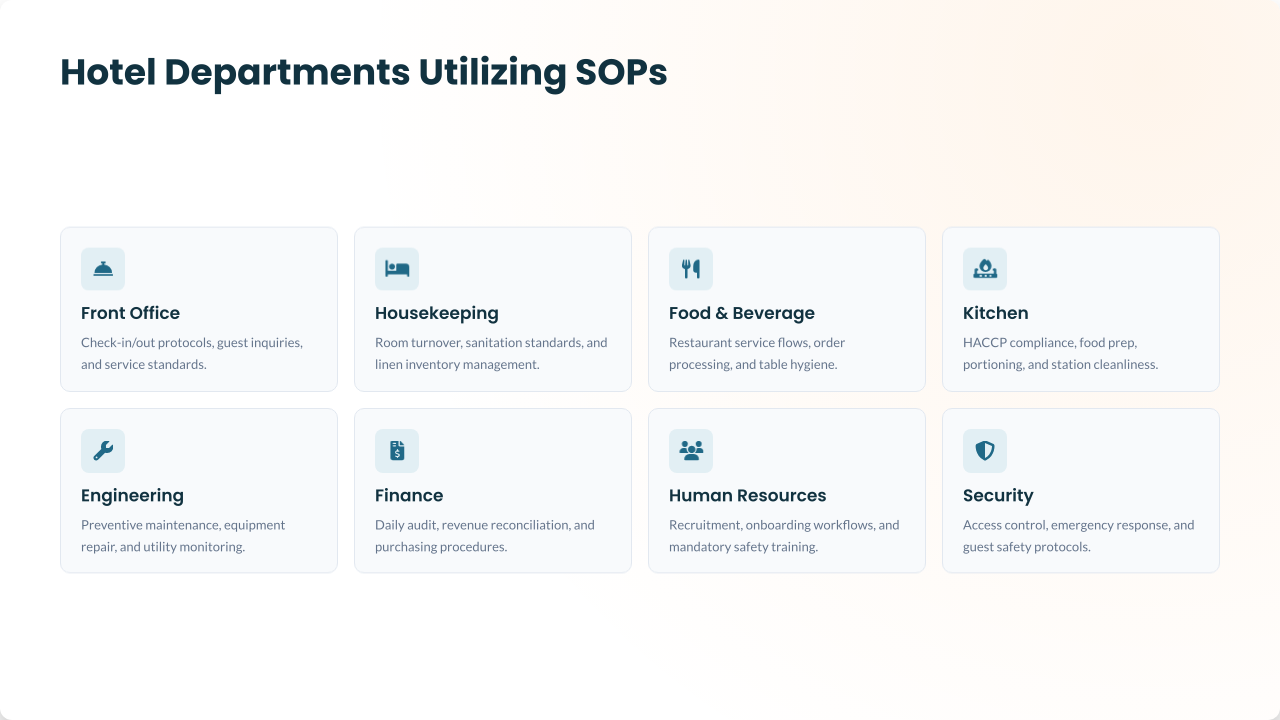
Every hotel department relies on Standard Operating Procedures (SOPs) to standardize routine operations, maintain service quality, and ensure employees perform tasks consistently. While the specific procedures vary depending on the property’s size, brand standards, and operational model, most hotels maintain SOPs covering all core operational and administrative functions.
Common examples of Hotel SOPs include:
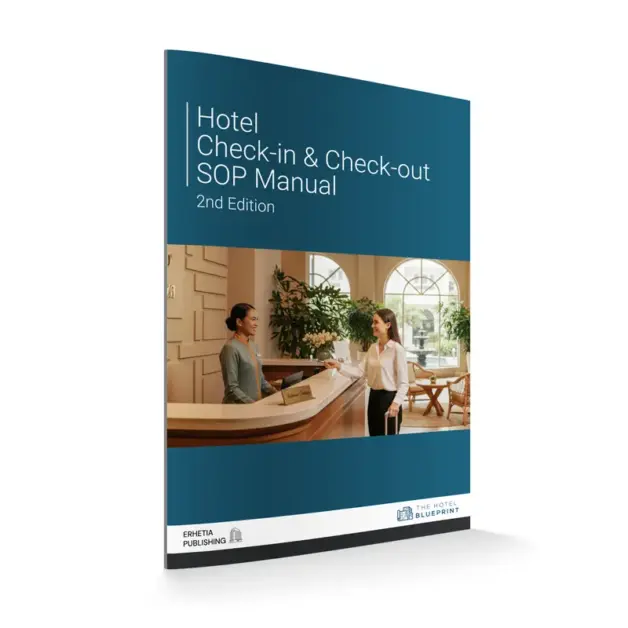
- Front Office SOPs – Guest reservations, check-in and check-out procedures, guest enquiries, cash handling, room allocation, and complaint resolution.
- Housekeeping SOPs – Guest room cleaning, public area maintenance, linen management, lost and found procedures, minibar control, and room inspections.
- Food & Beverage SOPs – Restaurant service, buffet operations, room service, banquet service, food safety, beverage preparation, and cash control.
- Kitchen SOPs – Food preparation, hygiene standards, HACCP procedures, inventory management, receiving deliveries, and equipment cleaning.
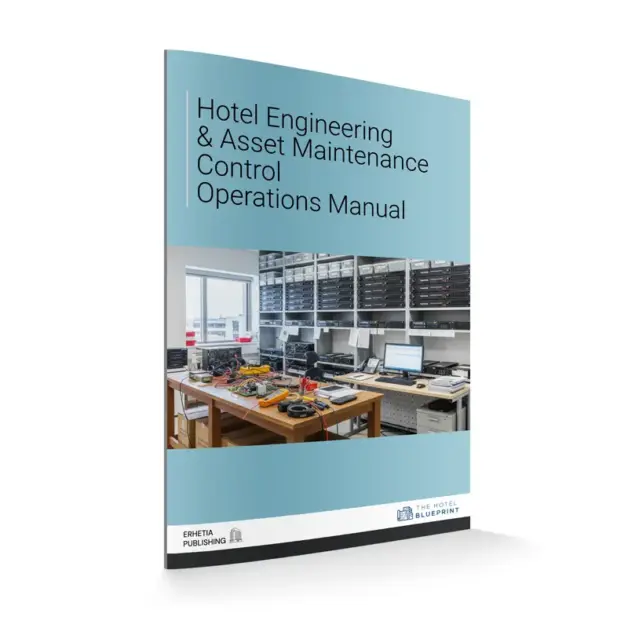
- Engineering & Maintenance SOPs – Preventive maintenance, equipment inspections, work order management, emergency repairs, and utility monitoring.
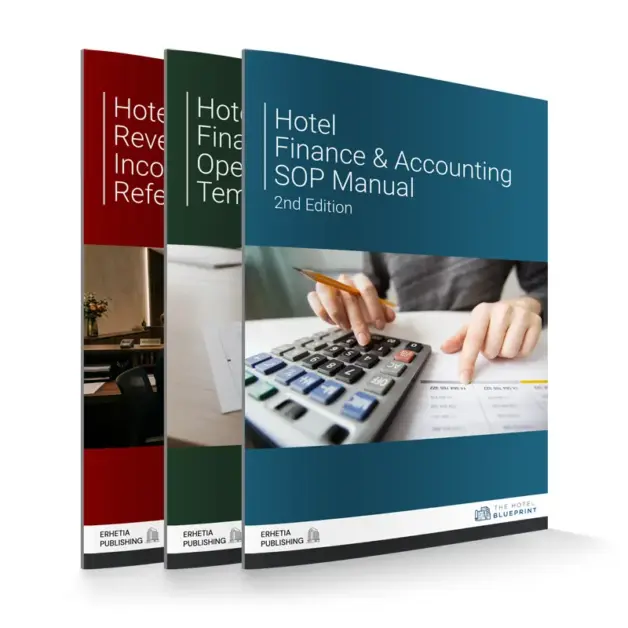
- Finance & Accounting SOPs – Night audit, cash reconciliation, accounts payable, purchasing controls, financial reporting, and internal control procedures.
- Human Resources SOPs – Recruitment, onboarding, employee training, performance evaluations, disciplinary procedures, and payroll administration.
- Security SOPs – Emergency response, fire safety, incident reporting, access control, key management, and guest security procedures.
Together, these procedures form a comprehensive operational framework that helps hotels deliver consistent service, maintain compliance, improve efficiency, and support effective day-to-day management across every department.
5. How to Write a Hotel SOP
Developing effective Hotel Standard Operating Procedures requires more than documenting a sequence of tasks. A well-written SOP should define a standardized method for performing an activity consistently, clearly assign responsibilities, and establish measurable quality standards that can be applied across departments and shifts.
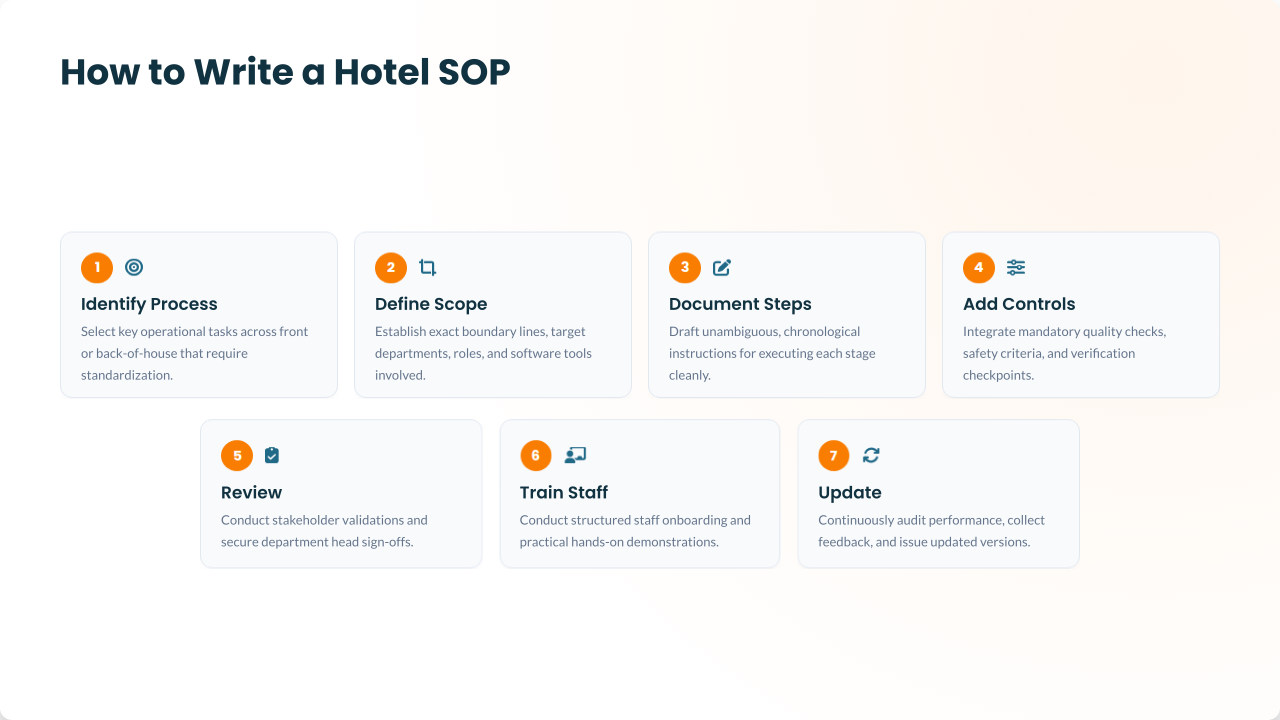
Although every hotel develops SOPs according to its own operational requirements, the process generally follows these key steps:
- Identify the process – Select a recurring operational activity that requires standardization, consistency, or regulatory compliance.
- Define the objective and scope – Clearly state the purpose of the procedure, where it applies, and which departments or positions are responsible.
- Document the workflow – Break the activity into logical, sequential steps using clear, concise, and operational language that employees can easily follow.
- Include quality and control measures – Specify operational standards, safety requirements, compliance obligations, approval points, or performance indicators where applicable.
- Review with operational stakeholders – Validate the procedure with department managers and employees to ensure it accurately reflects actual operations and can be implemented effectively.
- Train employees and implement the SOP – Introduce the procedure through structured training and ensure it is readily accessible to all relevant staff.
- Monitor, review, and update regularly – SOPs should be treated as living documents that evolve with operational changes, new technologies, regulatory requirements, and continuous improvement initiatives.
Effective Hotel SOPs are practical, easy to understand, and consistently applied throughout the organization. Their objective is not simply to document how work should be performed, but to create repeatable operational standards that improve consistency, accountability, and service quality across the property.
6. Benefits of Hotel SOPs
When properly developed and consistently implemented, Hotel Standard Operating Procedures (SOPs) provide benefits that extend well beyond task standardization. They support operational consistency, improve employee performance, strengthen internal controls, and contribute to the long-term financial and organizational success of the property.
– Operational Benefits
SOPs establish standardized workflows that reduce operational variability across departments and shifts. By ensuring that recurring tasks are performed using consistent methods, hotels can improve service quality, reduce errors, accelerate task execution, and maintain defined operational standards regardless of staffing changes or business volume.
Standardized procedures also simplify quality assurance by providing measurable benchmarks for audits, inspections, and supervisory reviews.
– Training and Human Resources
Hotel SOPs serve as a structured knowledge base for employee onboarding, training, and professional development. Rather than relying on informal coaching or individual experience, employees receive clear operational guidance that accelerates learning, clarifies responsibilities, and promotes consistent performance.
Well-maintained SOP libraries also preserve institutional knowledge, support succession planning, facilitate cross-training between departments, and contribute to greater operational stability as teams evolve over time.
– Compliance and Risk Management
Many hotel procedures incorporate legal, health, safety, security, and financial control requirements into everyday operations. By embedding these requirements directly into standardized workflows, SOPs help reduce compliance risks, improve accountability, and ensure operational activities are performed according to established internal and external standards.
Regular review and version control further ensure that procedures remain aligned with regulatory requirements and changing operational practices.
– Financial and Business Performance
Although financial performance is influenced by many factors, consistent operational execution provides the foundation for sustainable business results. Standardized procedures help minimize operational errors, improve resource utilization, strengthen internal controls, and support more consistent guest experiences.
These improvements contribute indirectly to key hotel performance indicators such as guest satisfaction, operational efficiency, repeat business, occupancy, Average Daily Rate (ADR), and Revenue per Available Room (RevPAR). By reducing variability in daily operations, SOPs become an important component of long-term operational excellence and organizational performance.
7. Conclusion
Hotel Standard Operating Procedures (SOPs) provide the operational framework that enables hotels to deliver consistent service, maintain quality standards, support employee performance, and strengthen organizational control. By documenting best practices and standardizing routine activities across departments, SOPs reduce operational variability while improving efficiency, accountability, and compliance.
However, effective SOPs are not static documents. They should be reviewed regularly, updated to reflect operational changes, and integrated into training, quality assurance, and continuous improvement initiatives. When actively maintained, SOPs evolve from simple procedural documents into strategic management tools that support long-term operational excellence.
Whether developed independently or adopted as part of a comprehensive operational documentation system, professionally structured Hotel SOPs represent a long-term investment in service consistency, employee capability, risk management, and sustainable business performance.